 English



Views: 0 Author: Site Editor Publish Time: 25-08-2026 Origin: Site


Selecting the right specifications for a disc harrow is not just a simple technical preference. It directly impacts your tractor fuel consumption, field preparation time, and replacement cycles. Farmers often overlook how these specific details affect daily operations. Choosing mismatched specifications quickly leads to poor soil penetration. You might experience excessive blade breakage in rocky conditions. Premature wear is another common issue. This rapidly inflates your operating expenses and slows down critical planting windows. A structured evaluation of your soil conditions, tillage depth requirements, and tractor capabilities is absolutely required. You must specify the exact dimensions carefully to achieve the best results. We will explore how to balance agronomic outcomes and hardware longevity. You will learn the core rules for sizing components. We will also help you match these tools to your specific farm environment.
Tillage Depth is Tied to Diameter: Effective working depth is typically 25% to 30% of the total disc diameter.
Thickness Dictates Downforce Requirements: Thicker blades resist rock damage but require significantly more implement weight and tractor horsepower to penetrate the soil.
Wear Alters Geometry: Discs lose their original angle of attack and concavity as they wear down; replacement schedules must account for performance drop-off, not just total material loss.
Context is King: The optimal specification is always a compromise between sharpness (for cutting residue) and durability (for rocky or highly abrasive soils).
Properly specifying Agricultural Machinery Parts yields significant field benefits. We will focus on two main operational areas. These include operational efficiency and overall crop yield. We must look at daily field operations first.
Proper disc sizing reduces soil drag considerably. This directly lowers fuel consumption per acre. Your tractor does not have to work as hard. An undersized disc might spin too fast. An oversized disc requires massive pulling force. Both scenarios waste expensive diesel fuel. When you match the implement perfectly, it rolls smoothly. The blades slice crop residue cleanly. You avoid bogging down in heavy, wet soils. This precision saves hours of valuable field time. We see faster turnaround during tight planting windows. Time saved directly improves your seasonal scheduling. You complete your fieldwork before bad weather arrives.
The right geometry ensures consistent seedbed preparation. It incorporates stubborn weeds effectively. It also manages crop residue without creating a hardpan. A hardpan restricts downward root growth severely. It prevents proper water infiltration during heavy rains. Correctly sized blades mix the topsoil evenly. They leave a perfectly level field finish. Seed drills perform much better on level ground. You achieve highly uniform emergence across your fields. Uniform emergence always leads to higher harvest yields. Agronomists continually emphasize consistent tillage depth. Your hardware choices dictate this depth entirely. Poor choices create uneven fields and poor stands. Good choices create the perfect environment for seeds.
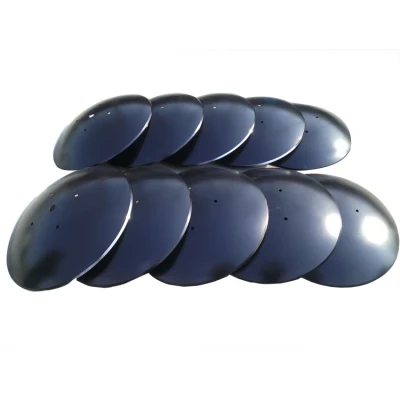
Selecting your ideal disc diameter requires basic field math. We rely on a proven industry formula. This formula prevents equipment damage and poor tillage.
Maximum effective tillage depth equals roughly one-quarter to one-third of the total diameter. A 24-inch disc cuts about six to eight inches deep. You cannot force a smaller blade deeper. The bearing spools will drag directly in the dirt. This causes severe component damage almost immediately. You must match the diameter to your agronomic depth goal. If you need eight inches of depth, buy larger blades. Do not force small blades past their physical limits.
Small Diameters (16” – 18”): These work best for shallow secondary tillage. They excel at final seedbed preparation before planting. They control small weeds highly effectively. Faster rotational speeds leave a very fine soil finish. However, there are notable operational trade-offs. Small blades struggle heavily in thick crop residue. They cannot bury heavy corn stalks or wheat stubble. They often plug when fields hold excess moisture. Use them strictly for finishing work.
Medium Diameters (20” – 22”): This range serves general-purpose farming perfectly. We consider this the standard for modern agriculture. It handles standard residue management exceptionally well. It provides excellent medium-depth soil incorporation. Medium blades offer a highly reliable operational balance. Yet, some minor trade-offs exist here too. They may float over heavily compacted field areas. You need sufficient implement frame weight for proper penetration. Most mid-sized farms rely heavily on this category.
Large Diameters (24” – 32”+): You absolutely need these for deep primary tillage. They excel at breaking unworked virgin ground. They deeply incorporate heavy, dense stalks. Large blades move massive amounts of dirt quickly. The structural trade-offs are highly significant. Your setup requires massive tractor horsepower to pull. You need a very heavy, reinforced implement frame. You also need wider disc spacing along the gang. Narrow spacing causes immediate plugging when moving heavy mud.
Thickness plays a critical role in field performance. It dictates how well the harrow disc blade survives hard impacts. It also determines your daily horsepower requirements. We divide these options into two main categories. You must choose carefully based on your local terrain.
Thin options maintain a sharp cutting edge much longer. They slice through tough residue very easily. You require much less frame weight for penetration. The tractor uses far less horsepower to pull them. They penetrate hard, dry ground very efficiently. This saves immense amounts of diesel fuel. However, severe structural risks exist. Thin metal is highly susceptible to bending under stress. It cracks easily in rocky field conditions. You might experience catastrophic failure upon striking hidden boulders. We only recommend these for clean, rock-free soils.
Manufacturers build these heavy options for brutal environments. They handle severe rock strikes beautifully. They survive highly abrasive soils year after year. You will see minimal edge chipping over time. However, they carry notable performance risks. As the edge dulls, the blade behaves poorly. It acts like a blunt, heavy instrument. You need significant downward pressure to maintain depth. Your tractor must supply increased horsepower continually. This strains your entire drivetrain heavily. You must ensure your equipment can handle this heavy burden.
You must base decisions on field rock populations. Count the average rocks per acre visually. Also, calculate your implement's weight-per-blade ratio carefully. Divide total frame weight by the total number of blades. Ensure you have enough weight to push thicker steel. Light frames will simply bounce over hard ground.
Disc Blade Thickness Comparison Chart
Blade Type | Thickness Range | Primary Advantage | Major Risk | Best Environment |
|---|---|---|---|---|
Thin Blades | 3mm – 4.5mm | Stays sharp, easy penetration | Bends or cracks easily | Sandy loam, zero rocks |
Thick Blades | 5mm – 8mm+ | Survives severe impacts | Requires massive downforce | Rocky or highly abrasive |
You cannot buy replacement parts in a vacuum. You must match your new disc blade thickness to existing equipment. Your tractor capabilities and soil type dictate the rules. Ignoring these factors leads to poor tillage results.
Pulling larger blades increases draft requirements significantly. Thicker steel also adds considerable drag through the dirt. Over-specifying size leads to severe transmission strain. You will experience excessive tire slip continuously. High slip wastes expensive fuel and ruins rubber tires. You must verify your tractor's drawbar horsepower rating. Ensure it handles the total implement draft easily. Do not push your machinery past its rated limits.
Sandy or Loam Soils: Favor standard thicknesses here. Choose moderate diameters for maximum field speed. These soils offer very low resistance. You prioritize field efficiency and speed above all else.
Heavy Clay Soils: You require adequate diameter for proper depth. Clay resists downward penetration heavily. Ensure proper spacing between individual blades. Incorrect spacing causes immediate plugging in wet clay.
Rocky Soils: You have a strict, non-negotiable requirement. You must use thicker blades for survival. Consider specialized heat treatments for the steel. These treatments prevent shattering during high-speed rock impacts.
Define the exact purpose of your soil tillage parts. Primary tillage involves deep, aggressive residue burying. It demands large, heavy blades for maximum disruption. Secondary tillage focuses on shallow clod sizing. It prepares the final, smooth seedbed. It uses smaller, sharper components for fine finishes. Mixing these roles guarantees poor agronomic results. A primary tool makes a terrible secondary finisher.
Blades do not last forever in the dirt. They wear down steadily over time. You must monitor this physical degradation closely. Ignoring wear leads to terrible field preparation.
A 22-inch disc worn down to 19 inches fails. It does not perform like a new 19-inch model. It has completely lost its original concavity. Concavity determines exactly how soil flips over. It has also lost its optimal angle of attack. The blade stops cutting residue and starts dragging. This dragging ruins your field finish completely. You will notice poor weed destruction immediately.
Continuing to run severely worn discs hurts operations. It increases bearing wear drastically over time. The dull edges reduce cutting efficiency severely. You leave un-tilled ridges across the entire field. These ridges interfere directly with planting equipment. Your expensive seeds will not drop evenly. You sacrifice crop emergence strictly to delay maintenance. This delay costs more in lost yield eventually.
Audit your current setup thoroughly today. Evaluate the previous failure mode very carefully. Did they fail from steady abrasion or impact breakage? Abrasion means you lost diameter slowly over time. Breakage means you hit hidden rocks hard. Adjust your specifications accordingly for the future. If they broke, increase the steel thickness. If they wore too fast, check the steel hardness. Use this logic for your next procurement cycle. Always adapt to your specific field history.
Optimal sizing remains a carefully calculated balance. You must balance depth goals and soil realities. Tractor capacity always limits your maximum implement size. Audit your current implement weight thoroughly today. Check your specific field conditions before ordering replacements. Small changes yield massive agronomic differences during harvest. Do not guess your component sizes randomly. Consult a specialized parts expert today. Request a formal quote for matched agricultural implement parts. You will maximize your next season's crop yield. Proper preparation always guarantees superior field performance.
A: Smooth discs provide a highly uniform finish. We use them primarily for final seedbeds. Notched discs offer very aggressive cutting action. They easily chop heavy crop residue. They also penetrate hard, compacted soils better. Farmers often place notched blades on the front gang. They place smooth blades on the rear gang.
A: Deeper concavity moves significantly more soil. It buries heavy crop residue much better. However, it requires much more tractor horsepower. Shallow concavity requires far less power. It leaves a noticeably smoother soil surface. We use shallow concavity for high-speed secondary tillage passes.
A: Generally, upgrading by one size is possible. You might jump from 20 inches to 22 inches. Ensure the arbor bolt sizing matches perfectly. Check clearance between the blades and scrapers. However, your implement's weight-per-blade ratio will decrease. This decrease potentially hinders deep soil penetration.