 English



Views: 0 Author: Site Editor Publish Time: 09-10-2026 Origin: Site


Selecting the right material for a CNC machined valve body is rarely a simple preference. It requires strict calculation. Engineers must balance unit cost, machining realities, and long-term field reliability. You cannot afford to guess when designing critical flow components.
While both brass and stainless steel serve as reliable industry standards, misaligning the alloy with the application carries severe consequences. If you choose the wrong metal, you risk premature component failure. You might face regulatory compliance issues. Furthermore, you could unnecessarily inflate your manufacturing budgets. Poor material choices disrupt entire fluid systems and lead to expensive production downtime.
This guide provides an objective, engineering-focused framework for your next project. We evaluate exactly when you should specify brass for superior cost-efficiency. We also detail when you can justify the premium price of a stainless alloy. You will learn how to match material properties to pressure thresholds, environmental conditions, and machining constraints.
Brass offers superior machinability and lower tooling costs, making it highly cost-effective for standard pneumatic flow control and non-corrosive fluid applications.
Stainless steel provides exceptional tensile strength and corrosion resistance, essential for high-pressure systems, aggressive chemicals, and strict sanitary compliance.
The total cost of ownership (TCO) must factor in CNC machining cycle times, tool wear, and lifespan, rather than just raw material prices.
Partnering with an experienced OEM manufacturing partner ensures proper material certification and adherence to tight geometric tolerances regardless of the chosen alloy.
Valve bodies act as the central housing for flow regulation. Their structural integrity dictates the success of the entire system. Material degradation directly results in fluid leaks. It causes sudden system pressure drops. In worst-case scenarios, it leads to catastrophic mechanical failure. These failures halt production lines and create severe safety hazards for operators.
You must define clear success criteria before approving a design. A successful material choice satisfies baseline operating pressures seamlessly. It handles all external environmental conditions without degrading. Furthermore, it optimizes CNC cycle times for large-scale production. You want parts machined quickly, accurately, and consistently.
Evaluating the cost-to-performance ratio remains crucial. You face significant danger when over-engineering a component. Wasting budget on stainless steel when brass easily suffices destroys profit margins. Conversely, under-engineering carries equally high risks. Using brass in highly corrosive environments triggers massive warranty claims. It damages brand reputation permanently. You must align the metal exactly to the operational demands.
Common Mistakes in Material Selection:
Selecting an alloy based purely on raw material spot prices.
Ignoring external environmental factors like high humidity or salt exposure.
Failing to consult CNC programmers regarding material machinability ratings.
Brass remains a highly favored material in manufacturing. It delivers reliable performance across countless standard applications. The alloy blends copper and zinc, yielding excellent physical properties.
Core Advantages
Brass provides exceptional thermal conductivity. It dissipates heat rapidly during operation. It also offers natural corrosion resistance to standard water and ambient air. Most importantly, brass boasts exceptionally fast CNC machining cycle times. Cutting tools slice through brass effortlessly. Tool wear remains incredibly low. Chips break away cleanly during the turning process. These factors result in significantly lower unit costs.
Ideal Use Cases
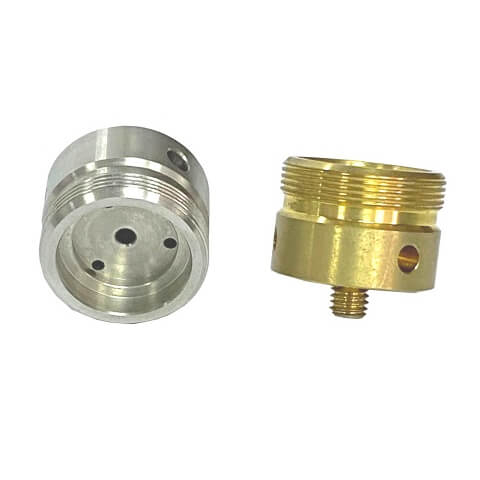
You will find brass thriving in low-to-medium pressure applications. It serves as the standard for pneumatic flow control systems worldwide. HVAC components rely heavily on brass housings. Standard residential and commercial plumbing fixtures utilize brass almost exclusively. A precision brass valve body easily handles everyday commercial demands.
Limitations & Risks
Despite its advantages, brass carries specific vulnerabilities. You must watch out for dezincification in highly aggressive water systems. When this occurs, zinc leaches out of the alloy. The remaining copper structure becomes porous, brittle, and prone to cracking.
Brass also features a lower tensile strength compared to steel alloys. This characteristic strictly limits its maximum pressure ratings. You cannot deploy brass in extreme hydraulic environments.
Finally, you will face compliance challenges. Standard brass contains trace amounts of lead to improve machinability. You often need specific lead-free brass alloys, such as eco-brass, to meet modern standards. These specialized alloys ensure compliance with RoHS directives and strict drinking water regulations.
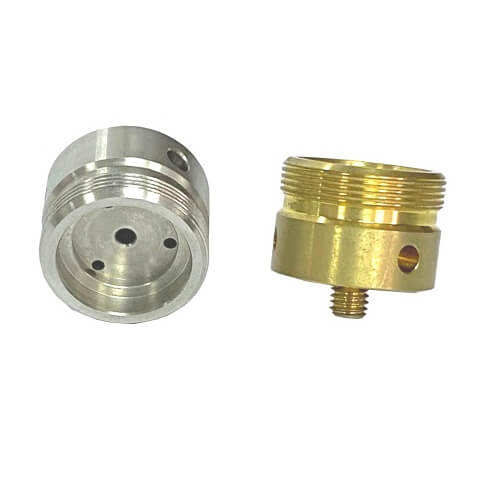
When operational environments turn hostile, engineers turn to stainless steel. This robust material withstands punishing conditions that destroy lesser metals.
Core Advantages
Stainless steel delivers superior mechanical strength. It maintains structural integrity under extreme stress. You also gain a remarkably broad temperature tolerance. It easily survives cryogenic freezing or extreme industrial heat. Furthermore, alloys like 316L provide near immunity to a wide range of corrosive chemicals. Oxidizing agents fail to penetrate its passive chromium-oxide layer.
Ideal Use Cases
Engineers specify a stainless steel valve body for highly demanding sectors. Industrial liquid cooling systems require it to prevent long-term scale buildup. Aggressive chemical processing plants mandate stainless components. High-pressure hydraulics rely on its supreme tensile strength. Additionally, food, beverage, and medical grade applications demand it. Stainless steel easily passes FDA and NSF sanitary inspections.
Limitations & Risks
You must prepare for manufacturing hurdles when specifying stainless steel. It possesses a significantly lower machinability rating compared to brass. The material tends to work-harden during the cutting process. This leads to dramatically increased tool wear. Your production times will stretch out, directly elevating manufacturing expenses.
You also face higher upfront raw material costs. Sourcing premium 316L stainless requires a larger initial budget.
Additionally, you risk thread galling during final assembly. Threads can fuse together permanently under pressure. You prevent this by engineering proper thread tolerances. You should also apply specific surface treatments or anti-seize lubricants.
Best Practices for Stainless Design:
Specify 316L over 304 if the valve will encounter chlorides or marine environments.
Avoid designing unnecessarily deep tapped holes, as chip evacuation in stainless proves difficult.
Collaborate with machinists to implement thread rolling rather than thread cutting where possible.
Choosing between these two metals requires a systematic evaluation. You must analyze four critical pillars before finalizing your engineering drawings.
You must strictly assess the exact chemical makeup of the fluid or gas passing through the valve. Determine the media's pH level. Identify any abrasive particulates suspended in the flow. Standard air and water generally favor brass. Acidic solutions immediately demand stainless steel.
Evaluate external environmental factors as well. Will the valve sit exposed to salt spray in a marine environment? Will it face daily corrosive chemical washdowns in a food processing facility? These external conditions dictate stainless steel just as strictly as the internal media.
Compare the specific yield strength requirements of your application against the mechanical properties of your chosen alloy. Brass handles standard pneumatic pressures safely. However, heavy-duty industrial hydraulics require the robust mechanical properties of 304 or 316 stainless steel.
Address how your material choice impacts wall thickness design. Because stainless offers higher tensile strength, you can often design a valve body with thinner walls. This reduces the overall component weight. Conversely, a brass body might require thicker walls to withstand the identical pressure rating.
Analyze how the chosen material impacts your manufacturing costs at scale. Material removal rates differ drastically between the two alloys.
Brass allows for high-speed machining. CNC spindles can run at maximum RPM. You achieve longer tool life and faster part changeovers. This drives down the per-unit cost significantly during high-volume production.
Stainless steel requires rigid tooling setups. Machinists must utilize specialized, expensive cutting inserts. They must program slower feeds and speeds to prevent work-hardening. These slower cycles directly increase the final component price. You must calculate whether the performance benefits justify this added machining expense.
You must frame the compliance requirements early in the design phase. Regulatory bodies strictly govern material choices in specific industries.
NSF and FDA standards dictate material safety for food, beverage, and potable water. You usually need certified 316 stainless or specialized low-lead brass to pass their inspections. Meanwhile, REACH and RoHS directives govern global electronics and equipment manufacturing. Ensure your selected alloy carries the appropriate material certifications to clear these regulatory hurdles smoothly.
Material Property and Performance Chart
Evaluation Metric | Free-Machining Brass (C36000) | Stainless Steel (Type 316L) |
|---|---|---|
Machinability Rating | 100% (Industry Standard Benchmark) | ~36% (Requires slower speeds/feeds) |
Tensile Strength | Moderate (Approx. 338 MPa) | High (Approx. 485 MPa) |
Corrosion Resistance | Good (Vulnerable to severe acids) | Excellent (Immune to many chemicals) |
Thermal Conductivity | High (Excellent heat dissipation) | Low (Retains heat) |
Unit Production Cost | Low (Fast cycles, lower tool wear) | High (Slower cycles, frequent tool changes) |
Selecting the right alloy only solves half the equation. You must ensure the manufacturing process executes your design flawlessly. Partnering with reliable OEM CNC machining experts minimizes production risks.
Both materials can hold incredibly tight geometric tolerances. However, maintaining that precision on internal bores and valve seats over long production runs requires different strategies.
Machining steel requires constant tool monitoring. Cutting inserts wear down faster, which can cause internal bore dimensions to drift out of tolerance. Operators must implement strict quality checks and frequent tool offsets. Brass, conversely, allows for long, stable production runs. Tool wear remains minimal, ensuring dimensional stability across thousands of parts.
Internal surface roughness (Ra) proves critical for valve bodies. Proper seal seating relies entirely on smooth internal finishes. If a bore is too rough, O-rings will shred, and the valve will leak.
Material grain structure affects this outcome. Brass polishes easily. You achieve excellent surface finishes with standard cutting tools. Stainless steel often requires secondary operations, like burnishing or precision honing, to achieve mirror-like Ra values. You must specify exact Ra requirements on your drawings to ensure proper sealing.
You cannot compromise on material validation. The necessity of material test reports (MTRs) remains absolute. You must demand strict raw material traceability from your manufacturing partner.
Counterfeit or sub-standard alloys flood the global market. Receiving a batch of brass with unapproved lead content will ruin an entire product line. Receiving 304 stainless labeled falsely as 316L will cause catastrophic field failures in corrosive environments. Reputable manufacturers track every metal billet from the foundry to the final shipping crate. They provide documented proof of chemical composition.
Selecting the ideal valve body material demands a rigorous evaluation of your engineering requirements and production budget. You must align physical material properties with actual field conditions.
Shortlisting Logic:
Choose brass for cost-sensitive, standard pneumatic or water systems. Machinability drives your return on investment here.
Choose stainless steel for harsh environments, high pressures, and strict regulatory demands. Specify it when field failure is simply not an option.
Next Steps: Lock in your specific environmental variables immediately. Document your exact pressure limits, media chemical composition, and regulatory compliance needs. Once you define these parameters, consult directly with your CNC machining partner. Request a prototype cost analysis comparing both materials. This data-driven approach guarantees you balance optimal performance with manufacturing efficiency.
A: Stainless steel valve bodies generally cost significantly more per unit than brass. This price gap stems from two factors. First, premium stainless alloys carry a higher raw material price. Second, stainless steel has a much lower machinability rating. It requires slower CNC spindle speeds, increases cycle times, and accelerates tool wear, substantially driving up manufacturing expenses.
A: Brass functions perfectly for standard pneumatic flow control, typically handling pressures up to 250-300 PSI safely. It offers excellent sealing properties. However, if your application involves ultra-high-pressure industrial pneumatics or severe hydraulic stress exceeding these thresholds, you must transition to stainless steel to prevent structural deformation and bursting.
A: You prevent thread galling by utilizing specific OEM CNC machining solutions. Machinists can implement thread rolling instead of traditional thread cutting to improve surface integrity. You should also engineer looser thread class tolerances where permissible. Finally, applying anti-seize compounds or specialized anti-galling coatings during assembly effectively stops the threads from cold-welding together.
A: Type 304 stainless serves well for general durability, offering good strength and baseline corrosion resistance. However, Type 316 (or 316L) is generally considered the superior choice for valve bodies. It contains molybdenum, which dramatically enhances its resistance to pitting and aggressive corrosive media, particularly chlorides and industrial chemicals.