 English



Views: 0 Author: Site Editor Publish Time: 17-07-2026 Origin: Site


Transitioning heavy equipment across finished concrete or asphalt poses a massive logistical challenge. You need reliable track protection. Bare metal destroys finished roads rapidly. You must avoid these crushing impacts to prevent steep surface damage fines. Yet, modifying an existing steel track pad setup presents a tough dilemma for fleet operators.
You must choose between two distinct modification paths. You can install semi-permanent standard pads. Alternatively, you can deploy temporary clip-on variants. Making the wrong choice drains maintenance budgets. It also stalls critical project timelines. Your decision directly impacts daily labor efficiency.
This guide delivers a straightforward, evidence-based breakdown of your options. We evaluate standard bolt-on configurations against modern clip-on alternatives. You will learn how to align your chosen pad type with your labor economics, project duration, and machine tonnage. By the end, you can confidently protect both the pavement and your operational bottom line.
Standard/Bolt-on rubber track pads offer superior stability and durability for high-torque applications but require significant labor hours to install and remove.
Clip-on rubber pads drastically reduce installation downtime, making them ideal for short-term urban jobs or fleets that frequently transition between dirt and finished asphalt.
Improper sizing or ignoring track debris buildup are the leading causes of premature failure for both pad types.
You must understand how each pad interacts with your machine's undercarriage. Your choice dictates how the protective rubber secures to the heavy steel shoe underneath. The attachment mechanism changes everything about your daily operation.
Let us examine the standard rubber track pad first. This unit acts as a semi-permanent extension of your track shoe. It fastens directly and securely into place. Mechanics must drive bolts straight through pre-drilled holes inside the steel shoe. Sometimes, older machines lack these holes. In those cases, operators attach the pads using heavy-duty chain brackets wrapping under the shoe. This bolt-on mechanism creates an incredibly rigid, unified bond. It prevents lateral shifting during intense operational pivoting.
Conversely, the temporary clip-on variant offers rapid, flexible deployment. It wraps tightly around the outer edges of the steel shoes. You secure it using a fixed bracket on one inner side. A strong, bolt-secured clamp holds the opposite outer edge. You never need pre-drilled track shoes for this setup. This clever design provides immediate surface protection. It allows operators to handle sudden job-site environment changes smoothly.
Equipment downtime directly burns through project cash. You must evaluate these accessories based on real-world labor economics. Time literally equals money on a construction site.
A standard bolt-on rubber pad requires significant manual labor. Technicians must precisely align multiple bolts through the steel shoes. This tedious process usually demands two skilled workers. Furthermore, rust, packed mud, and bent shoes drastically increase installation time. Older machines present even more severe alignment challenges. You might lose an entire working day outfitting one large excavator.
Clip-on advantages shine brightly in this metric. A single operator can equip a mid-sized excavator very quickly. They usually finish in under two hours. You completely skip the nightmare of removing existing shoes. You just clean the shoe edges, slide the fixed bracket on, and tighten the outer clamp. The machine gets back to digging almost immediately.
Operational Feature | Standard Bolt-On Pad | Clip-On Pad |
|---|---|---|
Crew Requirement | Usually 2 trained technicians | 1 standard operator |
Average Install Time | 4 to 8 hours | 1 to 2 hours |
Shoe Prep Needed | High (drilled holes must be perfectly clear) | Low (only outer edges need cleaning) |
Ideal Deployment Case | Long-term urban street projects | Frequent site-to-site pavement transitions |
This matrix helps you compare the hourly mechanic rate against your expected installation frequency. Frequent changes demand the faster clip-on approach. Permanent street work justifies the longer bolt-on installation.
Our Rubber Pad For Excavators Chart
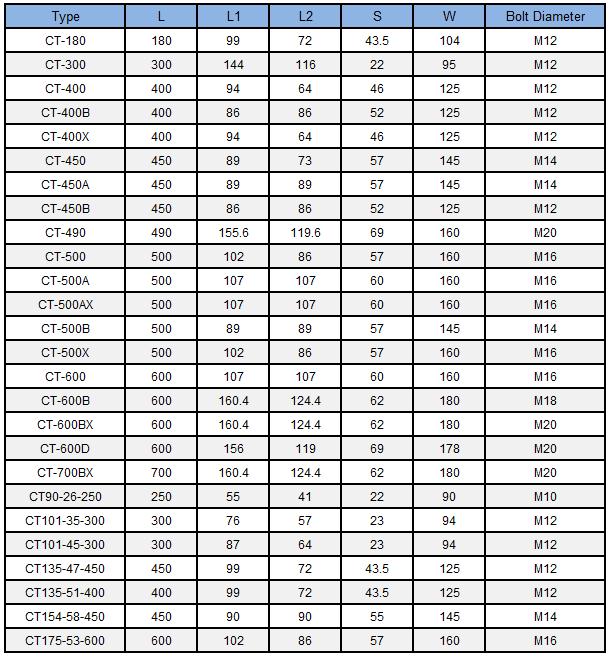
You must evaluate implementation realities alongside performance ceilings. Each design handles extreme torque and rugged terrain quite differently. You cannot ignore the physics of heavy machinery.
High-torque environments demand absolute rigid stability. A traditional excavator rubber pad easily resists immense lateral sheer forces. Heavy excavators constantly pivot on hard, abrasive surfaces like concrete. Bolt-on units handle this aggressive zero-turn stress beautifully. They fuse tightly to the shoe. They rarely shift out of alignment under heavy rotational load.
Clip-ons face a specific operational hazard. We call it the "mud packing" risk. Dense debris accumulates between the rubber and the steel base over time. Heavy mud or crushed gravel forces its way inside the gap. This mounting pressure gradually stretches the metal clamp holding the pad. Eventually, the stretched clamp allows the pad to slip out of alignment entirely. You must monitor this closely in wet environments.
Wear patterns vary heavily based on daily operator habits. Aggressive pivoting shreds the rubber compound on both types. However, rapid turning puts massive structural stress on clip-on brackets specifically. Operators should utilize wide, sweeping turns whenever possible. This simple driving habit preserves bracket integrity. It greatly extends the functional lifespan of the rubber.
Executing aggressive zero-turn pivots on highly abrasive hot asphalt.
Ignoring crushed rock trapped inside the clamp mechanism.
Failing to re-torque clamp bolts after the first 50 hours of use.
Driving over sharp rebar or exposed concrete forms.
You must evaluate the long-term financial impact and scalability of your track protection. Initial pricing only tells a fraction of the story.
Clip-on variants carry a slightly higher initial purchase price upfront. This premium covers the complex integrated bracket and clamp hardware. Manufacturers must cast stronger metal to handle the clamping tension. However, you make up this cost later through rapid deployment.
Replacement logistics heavily favor the temporary models during active jobs. Replacing a single damaged bolt-on unit remains inexpensive regarding parts. Yet, it proves highly labor-intensive in the actual field. Technicians must painstakingly unbolt rusted, bent hardware from beneath the machine. In contrast, replacing a damaged clip-on is incredibly fast. You simply unclamp the broken unit. You slide a new one on immediately. This speed prevents costly job-site bottlenecks.
Consider cross-equipment compatibility carefully. Excavator requirements focus entirely on heavy digging torque and stationary stability. Specialized paving equipment requires completely different performance tolerances. For example, a paver rubber pad prioritizes smooth, vibration-free travel. It requires high heat resistance rather than sheer tear resistance. You cannot safely swap these specific components between different machine classes. Always buy the dedicated pad type for your exact machinery.
Taking the correct next steps ensures perfect fitment upon delivery. It prevents frustrating return shipping delays. Follow this specific shortlisting logic to order correctly.
Inspect your existing undercarriage immediately. Are the steel shoes already pre-drilled from the factory? If they lack holes entirely, clip-ons become your only viable retrofit. Otherwise, you face replacing the entire steel track group. This visual audit saves you thousands of dollars.
Always check your exact weight classes. Heavy-duty clip-on units possess strict weight ratings assigned by engineers. A clip-on rubber pad designed for a 5-ton mini excavator will shatter on a 20-ton machine. Exceeding these tonnage limits risks catastrophic bracket failure mid-job. You lose your protection instantly.
Never guess your dimensions from memory. Grab a reliable tape measure and record these critical metrics:
Shoe width (measure straight across from outer edge to inner edge).
Pitch length (measure the exact distance between the track pins).
Bolt-hole spacing (measure center-to-center horizontal and vertical distances).
Precise measurement guarantees optimal performance and longevity. Write these numbers down before calling a supplier.
Look for highly transparent manufacturers. They should clearly state their natural-to-synthetic rubber blending ratios. High natural rubber content resists chunking and tearing much better. Review the warranty exclusions carefully before buying. Understand exactly what constitutes operator abuse versus a manufacturing defect.
Let us summarize the final verdict for equipment fleet managers. Choose standard bolt-on configurations for dedicated urban machines. They provide the necessary permanent protection for long-term paving jobs. Conversely, choose clip-on variants for mixed-use machines. They grant temporary street-legal status rapidly. You keep your dirt-digging efficiency high when moving back to soft soil.
Take action to protect your fleet today. Consult a detailed pad sizing chart for your exact machine model. Contact an undercarriage specialist to verify your specific measurements. Request a customized quote covering your entire fleet requirements. Establish a routine track inspection schedule for your daily operators. Smart preparation prevents costly pavement fines tomorrow.
A: Most standard triple-grouser steel shoes readily accept clip-ons. However, you must inspect your current shoes first. Heavily worn, bent, or abnormally thick shoes prevent the clamp from seating correctly. Always verify shoe condition before ordering new parts.
A: Not if operators torque them to the manufacturer's exact specifications. You must also keep the tracks completely clear of dense debris. However, they remain more susceptible to hard lateral impacts than traditional bolt-on variants.
A: Generally, no. A paver pad uses a specific rubber durometer and unique mounting profile. It ensures continuous forward motion and high heat resistance. Meanwhile, an excavator pad aggressively withstands high-impact pivoting and tearing.
A: Lifespan varies heavily based on operator skill, machine weight, and daily terrain. Standard longevity typically ranges from 500 to 1,500 working hours under normal operational conditions. Smooth driving greatly extends this timeline.