 English




Views: 0 Author: Site Editor Publish Time: 19-10-2026 Origin: Site


Precision drives modern farming. Yet, countless supply chains falter because buyers rely on vague engineering documents. An ambiguous specification document directly correlates to increased procurement costs, premature equipment failure, and operational downtime. You often face a harsh disconnect between engineering intent and manufacturing reality when sourcing components without strict documentation. This misalignment leads to inconsistent quality and frustrating field breakdowns during crucial harvest windows.
We will explore how to build a definitive framework for creating a technical and commercial specification. You will learn to strictly filter out unqualified vendors. We will also show you how to ensure verifiable component quality across every production run. By mastering these rigorous documentation practices, you protect your bottom line and keep critical farm equipment running smoothly under the most demanding agricultural conditions.
Under-specifying components introduces massive financial and operational risks. When an engineering drawing lacks detail, manufacturers guess. They choose cheaper materials or loosen tolerances to speed up production. These assumptions lead to field breakdowns during peak harvest seasons. A failed bearing or shattered tine might only cost a few dollars to replace. However, the resulting operational downtime costs thousands of dollars per hour. You also face expedited shipping costs to source emergency replacements.
A highly successful agricultural machinery parts specification achieves specific commercial outcomes. It drastically reduces defect rates. It creates a standardized baseline for vendor bidding, meaning every supplier quotes the exact same material and process. Ultimately, it ensures predictable lifecycle costs for the equipment. You eliminate the guesswork from the supply chain.
However, you must avoid the "over-specification" risk. Demanding aerospace-grade tolerances for standard farm implements unnecessarily inflates costs. Not every bracket requires a microscopic machine finish. You should transparently evaluate features-to-outcomes. If a structural weldment performs perfectly well within a looser tolerance band, document it. This strategic balance controls manufacturing expenses while preserving essential mechanical reliability.
Creating clear manufacturing boundaries starts with geometry and material science. You cannot assume suppliers know your application environment. You must dictate every physical requirement.
You must clearly define critical versus non-critical dimensions to optimize manufacturing costs. Critical dimensions dictate how a component mates with another assembly. These require tight tolerance bands. Non-critical dimensions, such as the outer edge of a protective guard, can accept looser tolerances. By separating these categories, you allow factories to machine parts faster. You also must specify required mating surface conditions and assembly allowances. If a shaft must slide into a gearbox, call out the exact surface roughness needed to prevent binding.
Tolerance Allocation Guidelines
| Feature Type | Tolerance Level | Cost Impact | Common Application |
|---|---|---|---|
| Critical Mating | Tight (±0.01mm) | High | Gearbox shafts, bearings, hydraulic seals |
| Structural Joint | Moderate (±0.5mm) | Medium | Frame brackets, bolted assemblies |
| Non-Functional Edge | Loose (±2.0mm) | Low | Debris shields, cosmetic paneling |
Never use generic terms like "mild steel" or "plastic" in your documents. You must require precise material callouts. Specify specific carbon steel grades like AISI 1045 for high-strength shafts. For plastics exposed to sunlight, demand UV-stabilized polyurethane. Furthermore, you must require traceability. Always mandate Mill Test Certificates (MTCs). These certificates prove the chemical composition of the raw metal. They prevent suppliers from substituting high-quality steel with inferior, recycled scrap.
Farm equipment faces harsh weather daily. You must specify exact coating thickness and application methods. Do not just ask for "paint." Demand specific powder coat formulations or hot-dip galvanization. Detail the required micron thickness of the coating layer. You must link coating requirements directly to expected field longevity. If a seeder operates in highly acidic soil, specify an epoxy primer base beneath a topcoat. This layered approach prevents rust from compromising structural integrity.
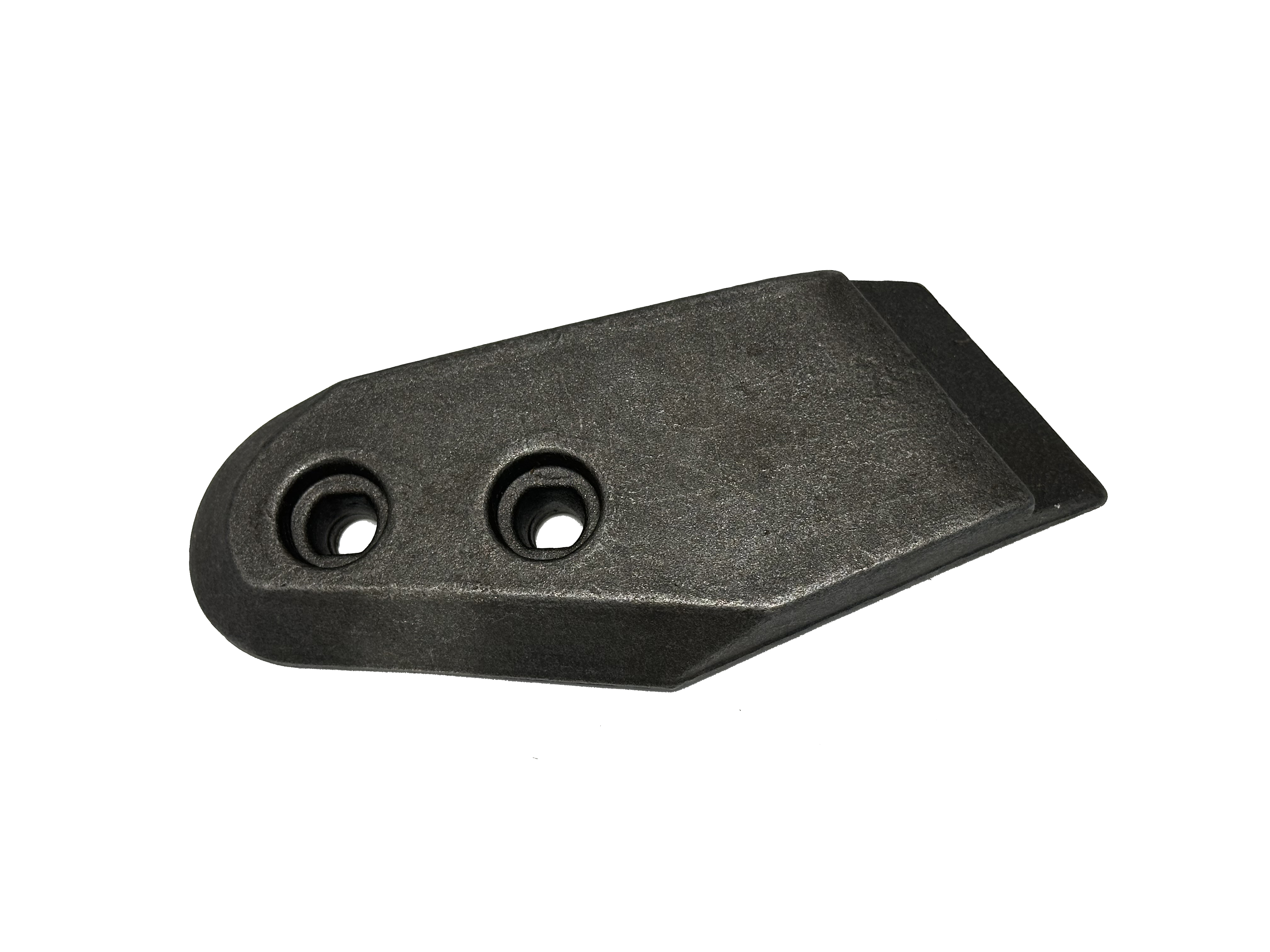
Tractors and implements do not operate in clean, climate-controlled rooms. They endure brutal physical punishment. Your documentation must reflect this reality.
Farm components experience constant movement. You must document expected continuous and peak load requirements. Address vibration, impact, and torque forces explicitly. A rotary tiller blade hits hidden rocks constantly. It must absorb impact energy. You must also specify required failure modes. Sometimes, you want a part to fail safely. For example, shear pins must bend and snap rather than shatter. This deliberate failure mode protects the primary, expensive drivetrain from catastrophic damage.
Agriculture introduces unique chemical and thermal challenges. You should require performance baselines against highly corrosive inputs. Synthetic fertilizers, pesticides, and animal waste aggressively attack metal and rubber. Your agricultural machinery parts must resist these specific chemicals. Include extreme temperature operating ranges. A tractor cab mount might face freezing winters and scorching summers. Set clear UV degradation limits for all exposed plastics and hydraulic hoses to prevent premature cracking.
A specification means nothing without enforcement. You must weave strict testing and compliance rules directly into the document.
Do not invent new testing methods. Mandate adherence to relevant regional and international frameworks. Reference ISO guidelines for general manufacturing tolerances. Use ASABE (American Society of Agricultural and Biological Engineers) standards for safety and implement hitches. Depending on your market, you might also require localized testing center requirements like AMTEC. Leveraging these established frameworks adds authority to your demands.
Vendors must prove parts work before they leave the factory. Outline the exact tests vendors must perform. Standard tests often include:
You cannot inspect every single bolt in a million-piece order. Instead, establish clear acceptable quality limits (AQL). Define sampling methodologies for large production runs. Tell the supplier exactly how many pieces they must pull per batch for inspection.
A standard inspection sequence usually follows these steps:
Once drafted, this document becomes your most powerful procurement tool. It transforms how you select and manage manufacturing partners.
You can use the completed specification as a Request for Proposal (RFP) baseline. When you send it out, watch how suppliers respond. Low-tier suppliers will ignore the tight tolerances or fail to provide a detailed quality plan. They will only quote a generic price. You can immediately disqualify them. Capable suppliers will ask clarifying questions about your coating thickness or material grade. The spec actively filters out unqualified factories.
You must assess a vendor's capacity to strictly adhere to the spec at scale. Do they possess the correct tooling capabilities? Ask for proof of their quality control infrastructure. If you require coordinate measuring machine (CMM) reports for complex geometry, verify they actually own a CMM. An excellent document is useless if the factory lacks the equipment to measure the results.
Never authorize mass production on a promise. Mandate specific technical deliverables. Demand First Article Inspection (FAI) reports. An FAI proves the supplier successfully manufactured one perfect part using the final production process. Additionally, require Production Part Approval Process (PPAP) documentation. Although common in automotive, PPAP is highly effective for agricultural machinery parts. It forces the supplier to prove their manufacturing process remains stable and repeatable over time.
A comprehensive agricultural machinery parts specification acts as a living document that protects the buyer's bottom line. By stripping ambiguity from your engineering requirements, you force suppliers to compete on capability rather than shortcuts. You minimize field breakdowns, standardize bidding, and extend the lifespan of your heavy equipment.
Your next-step action is clear. Encourage your technical and procurement teams to audit their current RFPs against this exact framework. Have them review past component failures to see where documentation lacked detail. Update your drawings and RFPs before initiating your next sourcing cycle to guarantee superior supply chain performance.
A: You must balance precision with cost. Tight tolerances (±0.01mm) belong on moving drivetrain components like gearbox shafts and hydraulic seals. Conversely, you should apply looser functional tolerances on structural frames and cosmetic shields to control manufacturing costs. Over-specifying non-critical areas needlessly wastes money.
A: OEM specs dictate the original engineering intent, load calculations, and proprietary material blends designed for initial assembly. Aftermarket specs often require reverse-engineering tolerances from existing components. Aftermarket documents focus heavily on fitment compatibility and replacing worn parts rather than validating original safety limits.
A: You must point to specific ASTM testing standards in your documentation. Mandate ASTM B117 for salt spray testing to guarantee rust resistance. You should also demand specific UV-stabilized polymer grades and chemical-resistant epoxy coatings to withstand prolonged exposure to synthetic fertilizers, animal waste, and extreme weather.