 English



Views: 0 Author: Site Editor Publish Time: 29-03-2026 Origin: Site


Wire drawing dies are precision tools used to reduce the diameter of metal wire by pulling it through a polished hole that is smaller than the incoming wire. As the wire passes through the die, its cross-section decreases, its length increases, and its final size becomes much more controlled.
If you are researching wire drawing dies, the key question is not only what they are, but what they are used for in real production. In practice, they are used to size wire accurately, improve surface finish, support multi-pass reduction, and help manufacturers make wire for applications such as cables, steel products, and fine conductors.
This article explains what wire drawing dies do, how they work, which materials are commonly used, and how manufacturers choose the right die for different wire materials and production stages.
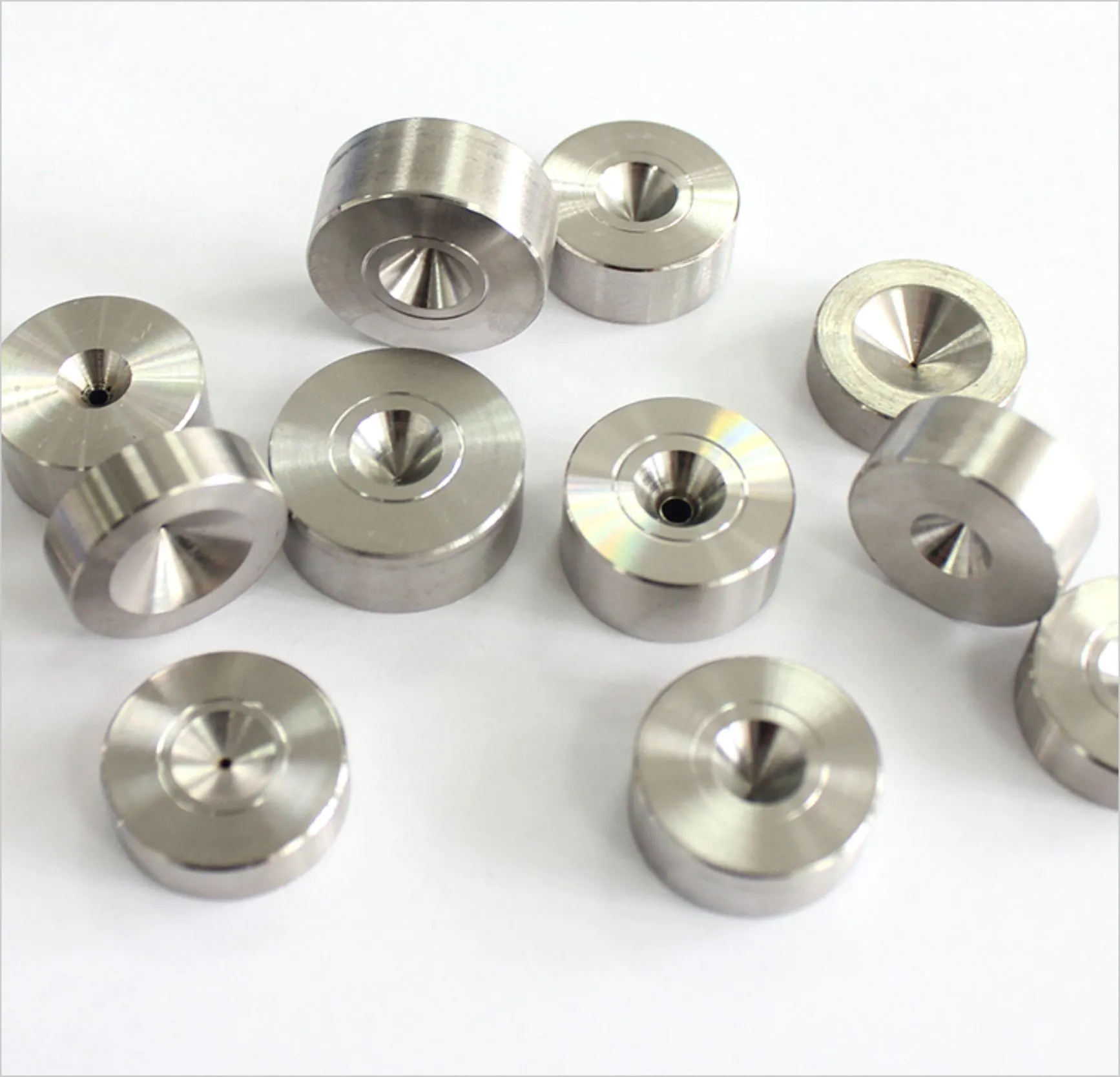
A wire drawing die is a tool with a carefully shaped internal hole that controls how wire is reduced during the drawing process. In industrial use, the die is typically mounted in a holder that helps manage lubrication and cooling while the wire is pulled through under tension.
Wire drawing machines use one die or a series of dies to reduce wire step by step. Each die has a smaller working diameter than the one before it, so the wire gradually reaches its target size and tolerance.
Wire drawing dies are used for far more than simply making wire thinner. Their main job is to control the drawing process so the wire comes out with the required size, finish, and consistency.
Reducing wire diameter to a required final size
Maintaining dimensional accuracy and production tolerances
Improving wire surface finish through a polished die profile
Supporting multi-pass drawing from rod to fine wire
Helping increase strength through cold working during drawing
Processing different metals such as copper, aluminum, steel, tungsten, and molybdenum
In practical manufacturing terms, that means wire drawing dies are used in the production of electrical conductors, cable components, steel wire, springs, ropes, and other products that depend on controlled wire size and quality.
The working principle is straightforward. A larger wire or rod is pulled through a smaller die opening. Because the opening is smaller than the incoming material, the wire is forced to reduce in cross-section as it passes through the die. This change in section also increases wire length.
In many industrial lines, the wire does not go directly to final size in one pass. Instead, it moves through a sequence of die and capstan stages, with each step making part of the total reduction. This helps control drawing force, heat generation, surface quality, and the risk of breakage.
Tip: When evaluating dies, think of them as part of the whole drawing system. Die performance depends heavily on alignment, lubrication, cooling, and tension control, not only on the die material itself.

The die bore determines the outgoing wire size. This is why wire drawing dies are central to achieving the target diameter and keeping the product within tolerance.
A polished die interior helps smooth the wire surface as it passes through. Good die condition and correct lubrication help reduce scratching, scoring, and other surface defects.
Drawing is a cold-working process. As the wire is reduced through the die, strain hardening can improve strength, which is one reason the die is so important to final product performance.
Wire drawing is a near-net-shape process, so it reduces diameter with very little material waste compared with cutting-based methods. The die is the tool that makes that efficient transformation possible.
Different die materials are used for different wire materials, wire sizes, and production stages. The most common categories are carbide-based dies and diamond-based dies.
| Die Type | Typical Use | Main Advantage |
|---|---|---|
| Tungsten carbide | General-purpose, rough and medium drawing | Good wear resistance and lower cost |
| PCD | Fine and ultra-fine non-ferrous wire | Long life and strong wear resistance |
| Natural diamond | Very fine, high-precision finishing passes | Excellent precision and surface finish |
| CVD diamond | Long-life or demanding wear applications | High wear resistance with good durability |
Tungsten carbide dies are widely used in general wire drawing because they balance toughness, wear resistance, and cost. They are often used for rough and medium drawing stages and for many standard industrial applications.
PCD dies are commonly selected for fine and ultra-fine wire drawing, especially for copper and aluminum applications where long life and good finish are important.
Natural diamond dies are typically used for very fine, high-value, or high-precision finishing work, while CVD diamond dies are positioned for demanding wear conditions and some corrosive-material use cases.
In cable and conductor production, drawing dies work together with lubrication, cooling, tension control, and PLC-based monitoring to maintain stable performance.
Die selection usually depends on four practical questions: what material is being drawn, what stage of drawing the die will handle, how fine the required finished wire is, and how much production volume the line must support.
Soft non-ferrous wires often favor PCD for life and finish
General industrial drawing often uses tungsten carbide for value and toughness
Fine or ultra-fine finishing may require diamond-based dies
Large-volume production often justifies longer-life die materials
The machine itself also matters. Multi-die lines, lubrication, and tension control are core parts of stable production, which means the “right die” is really the right die for a specific machine setup and product range.
Even a high-quality die will not perform well if it runs hot, off-center, or without proper lubrication. Industry references consistently point to friction, deformation heat, and wear concentration as major factors in die life and wire quality.
Temperature control is especially important at the die core where reduction occurs, while supplier guidance emphasizes alignment and lubrication as key steps for avoiding uneven wear and wire breakage.
Common Mistake: Choosing a premium die material and then overlooking lubrication condition, die alignment, or cooling capacity.
As dies wear, they can cause wire defects, unstable size control, and higher breakage risk. Common warning signs include scratches, wear rings, growing surface defects, and declining dimensional consistency.
Warning: Continuing to run a worn die can damage product quality and increase downtime later in the line.
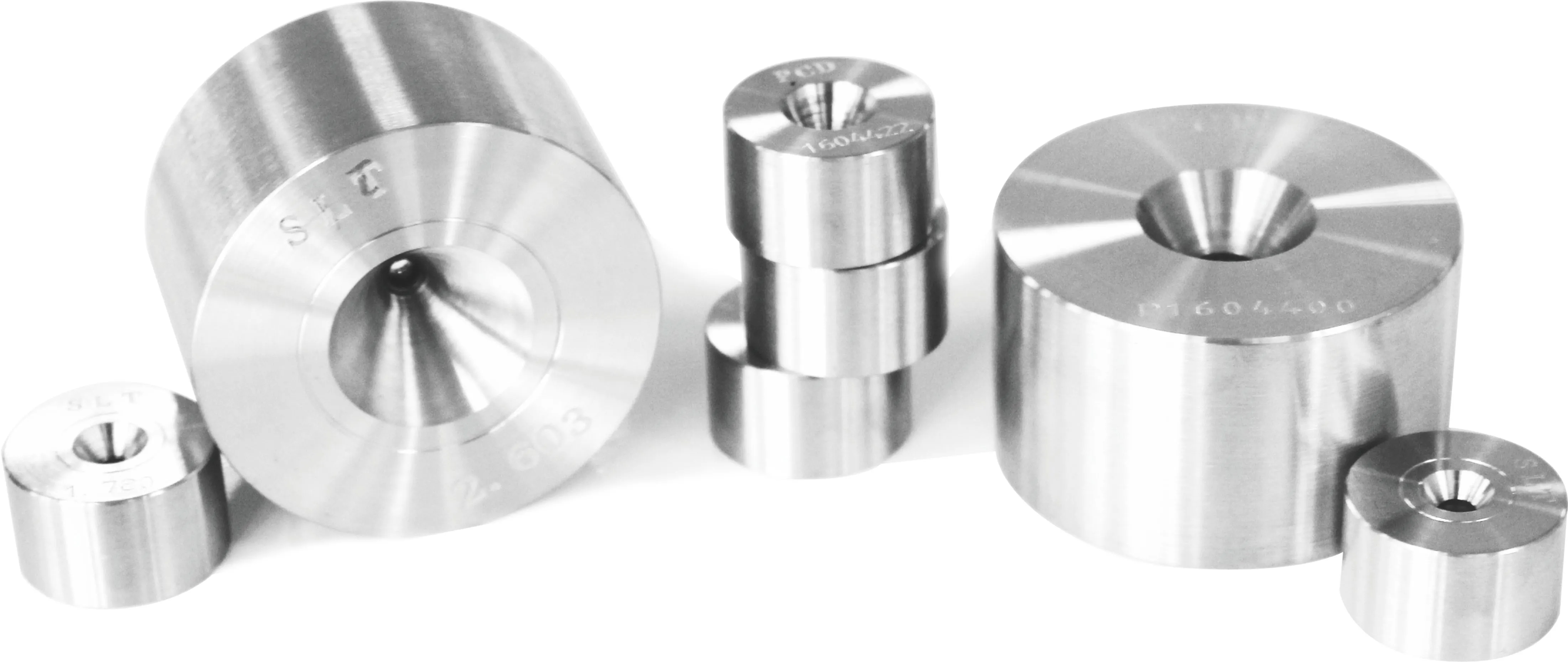
Wire drawing dies are the right tool whenever a manufacturer needs to reduce wire section in a controlled way while preserving quality and repeatability. They are especially important in cable production, fine-wire processing, and multi-pass industrial drawing where final diameter, finish, and process efficiency all matter.
Wire drawing dies are used to reduce wire diameter, control tolerance, improve surface finish, and support stable multi-pass drawing across many metals and applications. The best die choice depends on the wire material, the drawing stage, the required finish, and the production conditions around the die. In short, the die is one of the smallest parts of a drawing line, but it has one of the biggest effects on product quality and production efficiency.
A: They are used to reduce wire diameter, control final size, improve surface finish, and support the production of wire through one or more drawing stages.
A: No. They also help control tolerance, influence surface quality, and support mechanical property changes that occur during cold drawing.
A: Common die materials include tungsten carbide, PCD, natural diamond, and other diamond-based constructions depending on the application.
A: Different stages place different demands on toughness, wear resistance, precision, and finish, so manufacturers match die materials to the drawing stage and wire requirements.
A: Common causes include friction, heat, misalignment, poor lubrication, and the concentration of stress in key parts of the die profile.