 English



Views: 0 Author: Site Editor Publish Time: 23-01-2026 Origin: Site


Stage of Process | Impact on Precision and Efficiency |
|---|---|
Wax Pattern Creation | The investment casting procedure maintains precise temperatures to ensure accurate dimensions. |
Ceramic Shell Formation | The investment casting procedure controls shell thickness and composition for dimensional accuracy. |
Metal Pouring | The investment casting procedure ensures optimal pouring temperatures and rates to minimize defects. |
Finishing Processes | The investment casting procedure enhances surface finish and maintains dimensional accuracy through controlled processes. |
Quality Control Measures | The investment casting procedure implements inspections and testing to ensure components meet specifications, enhancing reliability. |
The investment casting procedure reduces the need for extensive machining operations.
The investment casting procedure minimizes material waste and streamlines manufacturing processes.
Investment casting produces parts with high precision and excellent surface finishes, making it ideal for complex designs.
Each step in the investment casting process, from wax pattern creation to finishing, directly impacts the quality and accuracy of the final product.
Choosing the right materials, such as wax and metal alloys, is crucial for achieving desired mechanical properties and minimizing defects.
Investment casting reduces the need for extensive machining, saving time and costs while maintaining high quality.
Implementing strict quality control measures throughout the process ensures that parts meet specifications and enhances reliability.
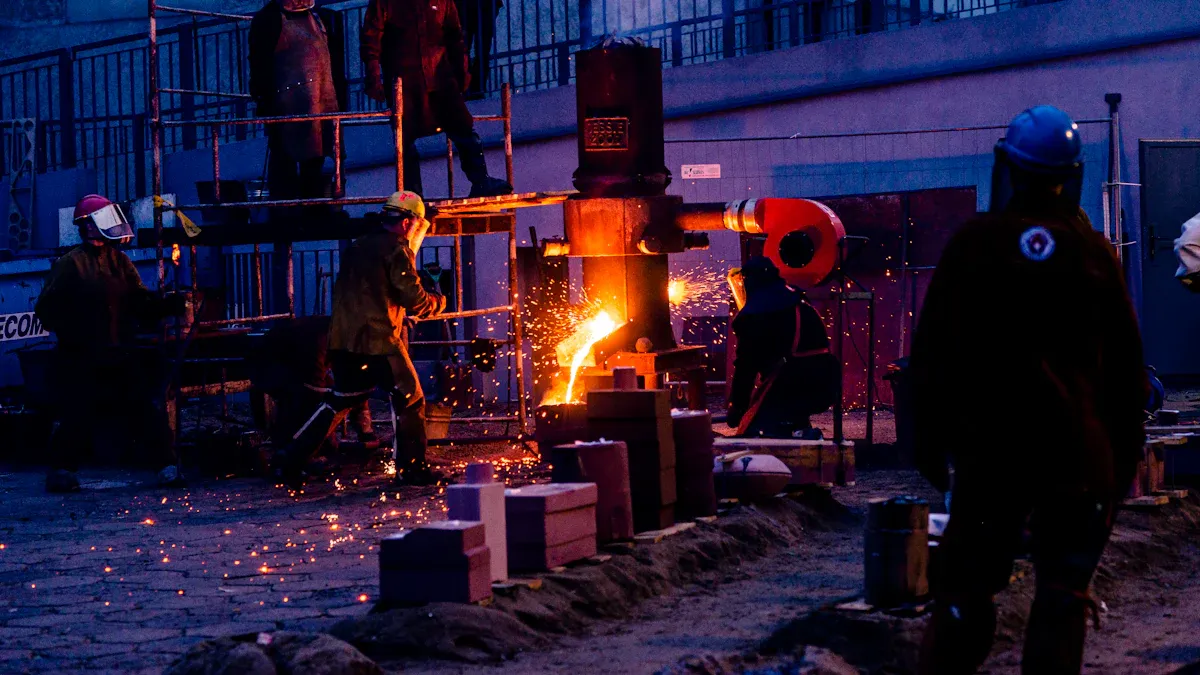
You use investment casting when you need to create complex metal parts with high precision and excellent surface finish. The investment casting process involves making a wax replica of your desired component, coating it with a ceramic shell, and then removing the wax to leave a cavity. You pour molten metal into this cavity to form the final part. This multi-step approach sets investment casting apart from other casting methods. You achieve finer detail, tighter tolerances, and smoother surfaces compared to sand casting or die casting.
Note: Investment casting is ideal for industries that demand intricate shapes and minimal machining. Aerospace, medical, robotics, and semiconductor sectors rely on this process for components that require seamless fitting and superior quality.
You benefit from investment casting when you need to work with a wide range of alloys, including stainless steel and other difficult-to-cast metals. The investment casting process supports both small and large parts, making it versatile for many manufacturing needs.
You follow a series of precise steps during the investment casting process to ensure consistent results:
Manufacture the Wax-Injection Tooling: You create tooling to form accurate wax patterns.
Produce Wax Patterns: You inject wax into the tooling to make replicas of your part.
Assemble Wax Patterns to Form a Tree: You attach multiple wax patterns to a central sprue, forming a cluster.
Produce the Investment Shell: You dip the wax tree into ceramic slurry and coat it with refractory materials to build a strong shell.
Dewax the Mold: You heat the shell to melt and remove the wax, leaving a hollow cavity.
Pre-Heat the Mold: You heat the ceramic shell to prepare it for metal pouring.
Pour the Castings: You pour molten metal into the pre-heated shell.
Clean the Castings: You remove the ceramic shell and clean the cast parts.
Finish the Castings: You cut, polish, and inspect the components to meet your specifications.
Characteristic | Investment Casting | Sand Casting | Die Casting |
|---|---|---|---|
Surface Finish | Finer | Rougher | Good |
Detail | Excellent | Limited | Good |
Machining Needs | Reduced | High | Minimal |
Material Compatibility | Wide Range | Limited | Non-ferrous |
Part Size | Small to Large | Small | Small |
Cost | Higher | Lower | Moderate |
Cycle Time | Longer | Shorter | Shortest |
You see that investment casting delivers unmatched detail and finish, but you must plan for longer cycle times and higher costs. The investment casting process remains the preferred choice when quality and complexity matter most.
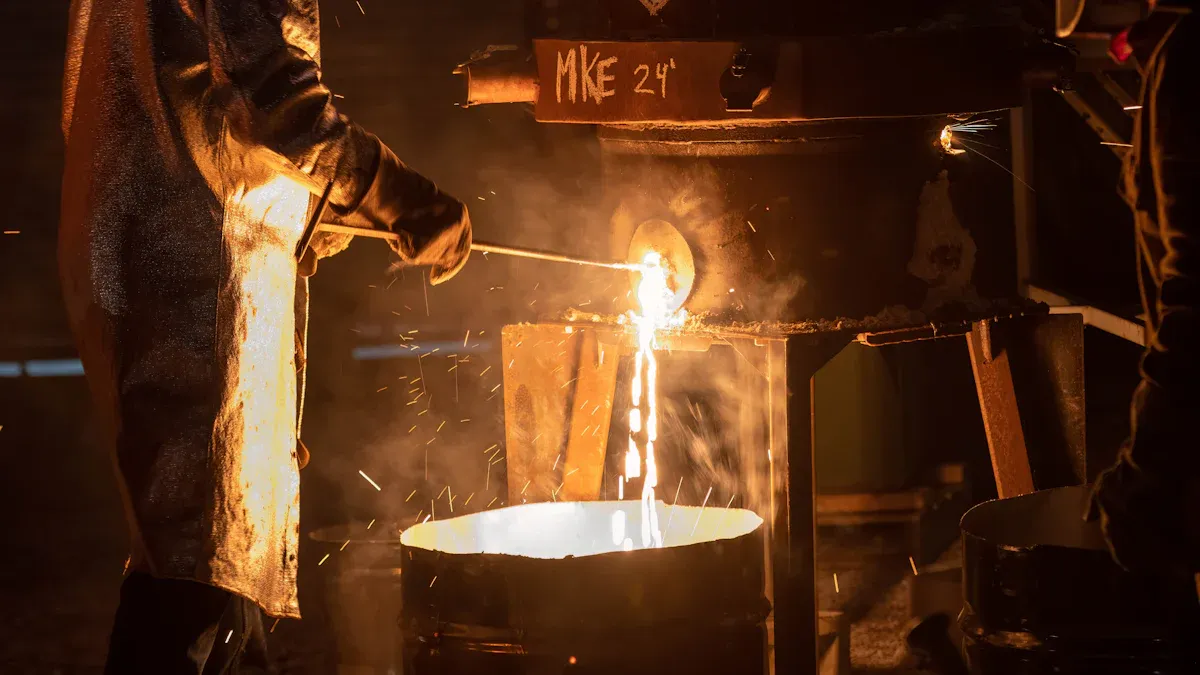
You begin the investment casting procedure by creating wax patterns that replicate your final part’s geometry. This step is crucial for achieving precision and producing complex shapes. You select the wax type based on your project’s requirements. Common waxes include pattern wax, gating wax, bonding wax, and water-soluble wax. For intricate or large components, you may use filled pattern wax for added strength, while non-filled pattern wax suits smaller projects due to its cost-effectiveness and recyclability.
Type of Wax | Description |
|---|---|
Filled Pattern Wax | Contains additives for enhanced properties, used for large or complex patterns requiring strength. |
Non-Filled Pattern Wax | Simple formulation, cost-effective, suitable for small to medium projects, easy to recycle. |
Runner Wax | Excellent flow properties, critical for mold filling, lower melting point for easier removal. |
Sticky Wax | Tacky wax for assembling patterns, versatile but not a substitute for pattern wax. |
Water-Soluble Wax | Sustainable option, dissolves in water, ideal for intricate geometries without residue. |
The quality of your wax pattern directly affects the final casting. If you use a mold with a rough surface, the wax pattern will inherit this roughness, which then transfers to the metal part. You must choose wax materials with optimal crystallization and solidification properties to ensure a smooth surface and accurate dimensions. Achieving high precision at this stage sets the foundation for the entire investment casting procedure.
Once you create individual wax patterns, you assemble them onto a central wax sprue to form a tree structure. This assembly allows you to cast multiple parts simultaneously, improving efficiency. You can perform this step manually or use robotic assistance for higher consistency. Heated tools and adhesive wax help you bond the patterns securely.
Proper alignment and spacing during assembly are essential. Misalignment can cause uneven metal flow, leading to defects such as cracks or dimensional variability. You use alignment tools to maintain the integrity of each pattern, ensuring even stress distribution and high precision in the final product.
You optimize the sprue and runner system design to promote uniform metal flow. This step is especially important when casting complex shapes, as it reduces the risk of defects and improves overall casting quality.
You proceed to form the mold shell by repeatedly dipping the wax tree into ceramic slurry and coating it with refractory materials. You use materials such as silica sand, corundum, and aluminosilicate refractories for the shell, while binders like ethyl silicate hydrolysate, water glass, or silica sol provide strength and dimensional accuracy.
Material Type | Description |
|---|---|
Refractory Materials | Silica sand, corundum, aluminosilicate refractories (e.g., refractory clay, aluminum banadium) |
Binders | Ethyl silicate hydrolysate, water glass, silica sol |
Coating Properties | Ethyl silicate provides high shell strength and dimensional accuracy; water glass is less stable |
You build the shell to a thickness as low as 0.5 mm for applications requiring fine detail, such as turbine vanes or medical devices. Thin shells allow you to achieve complex shapes with high precision, while maintaining strength and stability throughout the investment casting procedure.
After the shell hardens, you remove the wax by heating the assembly in an autoclave or furnace. This step, known as dewaxing, leaves a hollow cavity that matches your original pattern. Complete wax removal is critical. Any residual wax can cause surface irregularities, porosity, or inclusions in the final part. These defects compromise mechanical properties, reduce lifespan, and may lead to catastrophic failures in demanding applications.
You must monitor the process closely to ensure all wax is eliminated. This attention to detail preserves the precision and quality of your investment casting, especially for complex shapes used in aerospace or medical industries.
You preheat the ceramic shell to prepare it for metal pouring. You select the metal alloy based on your application, with options including stainless steel, carbon steel, cast iron, aluminum, copper, nickel alloys, cobalt alloys, and specialty alloys. You pour molten metal into the shell cavity, ensuring optimal temperature and flow rate to minimize defects.
You allow the metal to cool and solidify within the shell. Controlled cooling is essential for maintaining dimensional accuracy and achieving the desired mechanical properties. The investment casting procedure enables you to produce complex shapes with tight tolerances and superior surface finish.
Once the metal has cooled, you break away the ceramic shell to reveal the cast part. You may use automated high-pressure waterjets, hammers, or other tools to remove the shell without damaging thin walls or sharp edges. You cut the finished workpieces from the tree and inspect each part for imperfections.
You apply finishing techniques such as sanding, grinding, polishing, chemical finishing, or electroplating to enhance surface quality and meet exact specifications. These methods improve aesthetics, reduce friction, increase corrosion resistance, and ensure dimensional accuracy. You achieve the high precision required for complex shapes in industries like aerospace, automotive, and medical devices.
Tip: Automated shell removal and finishing processes improve operator safety and reduce manual labor, while maintaining the integrity of delicate components.
By following each step of the investment casting procedure, you ensure that your parts meet the highest standards of precision and quality. You can reliably produce complex shapes with minimal material waste and reduced need for machining.
You select wax and pattern materials based on the complexity and precision required for your investment casting project. Pattern wax, runner wax, sticky wax, and water-soluble wax each offer unique benefits. The choice of mold material for wax patterns directly impacts dimensional accuracy. Wax patterns produced with polyurethane molds show better dimensional accuracy than those made with silicone molds. Polyurethane molds typically result in an average shrinkage of only 1.0±0.4%, while silicone molds average 2.2±0.4%. The thermal conductivity of the mold material affects how the wax solidifies, which influences the stability and accuracy of your patterns. When you need tight tolerances, you should consider the mold material as a critical factor.
Tip: For intricate or large components, filled pattern wax provides added strength. For smaller projects, non-filled pattern wax offers cost savings and easy recyclability.
You build the mold shell using ceramic slurry and refractory materials. The shell’s composition determines its ability to withstand high temperatures and maintain dimensional stability during investment casting. The porosity and thermal conductivity of the shell play a key role in controlling the cooling rate of the metal. Higher porosity slows heat extraction, which is important for directional solidification. Excessive insulation can cause defects in conventional casting. The shell must also maintain high hot strength and creep resistance to support the liquid metal and prevent deformation. Gas permeability helps avoid defects from trapped air or vaporizing residues. Chemical interactions at high temperatures can change the pore structure, affecting both strength and permeability.
Aspect | Description |
|---|---|
Porosity | Higher porosity slows heat extraction, crucial for cooling control. Excessive insulation may cause defects. |
Thermal Conductivity | Influenced by porosity; more pores mean better insulation, which can help or hinder depending on the casting method. |
Mechanical Properties | High hot strength and creep resistance support liquid metal and maintain accuracy. Gas permeability prevents defects from trapped air and residues. |
Chemical Interactions | High temperatures can alter pore structure, affecting shell strength and permeability, which are critical for thermal stability during investment casting. |
You choose metal alloys for investment casting based on the mechanical properties needed for your application. Popular alloys include:
Stainless steel
Carbon steel
Alloy steel
Aluminium alloys
Copper-based alloys
Nickel-based alloys
Titanium alloys
Each alloy offers distinct advantages. Stainless steel and alloy steel provide high strength and toughness, making them suitable for aerospace and automotive parts. Titanium and copper-based alloys deliver excellent corrosion resistance, which is essential for harsh environments. Nickel-based alloys maintain integrity at high temperatures, ideal for power generation. Aluminium and titanium alloys offer lightweight properties, improving fuel efficiency. Good machinability in aluminium, copper-based alloys, and carbon steel reduces production time for complex designs. Wear resistance in carbon steel, alloy steel, and bronze extends component lifespan. Recyclable materials like aluminium, copper-based alloys, and stainless steel support sustainable manufacturing. Titanium and stainless steel are biocompatible, making them suitable for medical devices.
Note: Your choice of alloy in investment casting determines the final part’s strength, durability, and suitability for demanding environments.
You gain several advantages when you choose investment casting for your manufacturing process. This method delivers unmatched precision, allowing you to create complex parts with tight tolerances and excellent surface finishes. You can reduce or even eliminate the need for machining, which speeds up production and lowers costs. Investment casting also supports a wide range of alloys, including those that are difficult to machine.
Comparison Method | Advantages of Investment Casting |
|---|---|
Machining | Reduces or eliminates machining, leading to faster production and lower costs. |
Welding | Improves part strength and appearance by removing visible weld lines. |
Sand Casting | Achieves tighter tolerances and reduces scrap rates for lighter, more reliable castings. |
Die Casting | Offers a wider range of alloys and lower tooling costs, ideal for lower production volumes. |
You can handle intricate designs, including logos and fine features, while maintaining high precision. Quality control checks for dimensional stability and surface finish often push pass rates above 95%. Real-time monitoring with sensors helps you control temperature and pressure, ensuring consistent accuracy.
Despite its strengths, investment casting presents several challenges. You face high initial costs due to specialized tools and materials. The process requires significant time, especially when building and drying the ceramic shell, which can delay production. Investment casting works best for small to medium-sized parts; large or heavy components may exceed its capabilities. The process is complex and demands skilled labor at every stage, which can increase costs and risk of errors.
Challenge | Description |
|---|---|
High Initial Costs | Specialized tools and materials increase upfront expenses. |
Longer Production Lead Times | Building and drying ceramic shells takes time, delaying production. |
Size and Weight Constraints | Best suited for small to medium parts; large components may need other methods. |
Process Complexity | Requires skilled labor and precise control at each step. |
Limited Cost-Effectiveness | High costs make it less economical for very small production runs. |
You must maintain strict process control to achieve the desired precision. Any lapse can lead to defects or dimensional variability.
Before you implement investment casting, evaluate your production needs carefully. Focus on these practical considerations:
Design for castability by using draft angles, fillets, and uniform wall thickness to minimize defects and improve precision.
Select materials that balance mechanical properties with environmental requirements.
Establish rigorous quality assurance protocols to maintain high standards for precision and surface finish.
Collaborate with experienced suppliers to ensure technical support and reliable delivery.
Optimize costs by simplifying designs and improving process efficiency.
Tip: If your project demands high precision, complex shapes, and excellent surface finish, investment casting offers a strong solution. However, assess your volume, budget, and timeline to ensure the process aligns with your goals.
You can achieve consistent results by following each step of the investment casting procedure. This process helps you produce high precision parts with excellent surface finish and minimal waste. Understanding the workflow improves your production quality and efficiency. If you manufacture complex or high precision parts, consider investment casting as a solution.
Explore technical guides or consult with industry experts to get started.
Evaluate your current production needs and compare them with investment casting capabilities.
You see investment casting used in aerospace, medical, automotive, and electronics. These industries need complex shapes and tight tolerances. You achieve high-quality results for metal parts manufacturing when you choose this process.
You control temperature, wax pattern quality, and shell thickness. You inspect each stage and use precise tooling. These steps help you maintain consistent dimensions and reduce defects.
You recycle wax and some metals. You collect leftover wax and melt it for new patterns. You also reuse metal scrap when possible. This practice reduces waste and lowers costs.
You may encounter porosity, cracks, or surface roughness. You prevent these issues by monitoring temperature, using clean materials, and inspecting molds. Careful process control helps you avoid most defects.
You achieve finer detail and smoother surfaces than sand casting. You use more alloys than die casting. Investment casting works best for small to medium parts that need precision.