 English


Views: 0 Author: Site Editor Publish Time: 24-08-2026 Origin: Site


Selecting a ball mill liner is never a routine consumable purchase. It represents a critical operational decision. This choice directly impacts mill availability and overall plant energy efficiency. The grinding circuit typically accounts for a massive portion of a mine site's total energy consumption. Incorrect internal profiles or mismatched materials lead to catastrophic failures. You also face accelerated wear and highly disruptive unplanned downtime. These failures severely limit your plant's throughput capacity.
To succeed, operators must adopt a robust and scientific evaluation framework. We need to balance material science, design geometry, and long-term operational economics. By focusing on the cost per ton rather than simple upfront pricing, you make an evidence-based procurement decision. This article explores how to thoroughly evaluate and select the right internal components for your specific grinding application. You will learn how to align material properties with your ore characteristics. We will also detail how geometric designs influence grinding efficiency and maintenance schedules.
TCO outranks initial purchase price; evaluate liners based on cost-per-ton of processed ore and impact on scheduled downtime.
Material selection must align with the specific ore characteristics, mill diameter, and grinding media size (e.g., metallic vs. rubber vs. composite).
Liner profile design (lifter angle and spacing) directly dictates the charge trajectory, influencing both throughput and wear rates.
Supplier evaluation requires assessing their engineering support, DEM (Discrete Element Method) simulation capabilities, and post-installation condition monitoring.
Cost per ton is the true measure of a component's value. Evaluating a mining liner plate strictly by its upfront sticker price is a fundamentally flawed strategy. High-quality parts often require higher initial capital. However, they drastically reduce the overall cost per ton of processed ore. You must calculate the long-term operational performance. We always prioritize components that process more material before requiring replacement. Cheaper alternatives often degrade rapidly. They force you into frequent replacement cycles. This inflates your annual maintenance budget significantly. A higher initial investment often pays for itself within the first few months of operation.
Common Mistake: Procurement teams often select the lowest bidder without analyzing historic wear data. This creates a false economy where cheap parts drive up operational costs.
Downtime carries massive financial risk for any mining operation. Premature part failure stops production immediately. Unplanned mill stoppages erase profit margins very quickly. You lose valuable tonnage every hour the mill sits idle. Extending the wear cycle is absolutely crucial. You should align component lifespan with scheduled plant maintenance windows. This strategic alignment generates a highly measurable return on investment. It keeps your plant running smoothly. Predictive maintenance schedules allow you to mobilize labor and lifting equipment efficiently. You avoid the chaos and premium costs associated with emergency repairs.
Grinding efficiency directly correlates with the physical condition of the internals. A worn ball mill plate reduces energy transfer to the grinding charge. Slippage occurs when the internal profiles flatten out over time. This wastes electrical power and slows down mineral size reduction. Energy consumption spikes while throughput drops proportionally. Maintaining the correct profile shape is vital for operational efficiency. The media must lift and drop at the precise designated angle. If the profile loses its edge, the media slides instead of tumbling. This sliding action destroys the grinding efficiency completely.
Manganese steel provides an exceptionally high work-hardening capacity. It thrives under severe impact conditions. The material hardens as heavy grinding media continuously strikes it. This metallurgical transformation creates a tough outer surface. It absorbs massive shock forces without fracturing easily.
However, it carries notable operational risks. It is highly prone to peening and outward expansion. Over-expanded plates are incredibly difficult to remove during maintenance. They often wedge themselves tightly against the shell. This adds expensive hours to change-out procedures. Mechanics sometimes use cutting torches to remove them. We must carefully monitor this material in extremely large mills to avoid this expansion risk.
These specialized alloys deliver exceptional abrasion resistance. They excel in highly abrasive, high-wear environments. You get extended wear life where impact forces remain moderate. The dense microstructure resists scoring and gouging brilliantly. Operators use them extensively in secondary and tertiary grinding stages.
Their brittle nature is a major drawback. They require highly precise fitment against the mill shell. Misalignment leads to catastrophic cracking under high-impact conditions. Careful installation is mandatory to prevent sudden failures. You cannot subject them to massive primary grinding media without risking severe fracture.
Rubber offers distinct handling and operational advantages. It features significantly lighter weight. This makes installation safer and easier for maintenance crews. Rubber effectively reduces ambient operational noise. It improves the working environment around the grinding circuit. It also provides superior resistance to fine abrasive wear.
Temperature limits restrict rubber applications severely. They are generally unsuitable for highly aggressive environments. Large-diameter SAG mills or primary ball mill grinding often destroy rubber too quickly. High operating temperatures can degrade the compound. Heavy steel balls easily tear the rubber surface under severe impact.
Composite parts combine the best of both worlds. They integrate the extreme impact resistance of steel inserts. They also utilize the energy-dampening properties of heavy-duty rubber. The steel absorbs the direct impact. The rubber matrix dampens the shockwave before it hits the shell.
These solutions are ideal for modern large-scale mills. They balance extended wear life with significant weight reduction. Operators increasingly prefer them for optimized performance. They simplify installation while offering the durability of solid metal. You can customize the steel insert placement based on exact wear patterns.
Material Type | Primary Advantage | Key Limitation | Best Application |
|---|---|---|---|
Manganese Steel | High work-hardening under impact | Prone to peening and expansion | Primary grinding with heavy impact |
High-Chrome Iron | Exceptional abrasion resistance | Brittle; prone to cracking | Secondary/tertiary fine grinding |
Rubber | Lightweight and noise-reducing | Temperature and impact limits | Fine abrasive wear environments |
Poly-Met Composite | Balances impact resistance and weight | Higher initial engineering cost | Large-scale modern mill operations |
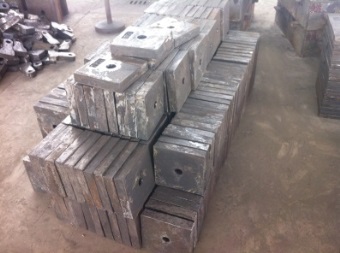
Lifter height and face angle dictate the internal charge trajectory. They control how the grinding media moves inside the rotating drum. A correct grinding mill liner design ensures media cascades for attrition grinding. Alternatively, it can cause media to cataract for heavy impact grinding. The face angle determines the release point of the media. If the release point is too high, the media strikes the shell directly. This wastes energy and accelerates mechanical damage. If the release point is too low, the media simply rolls. This drastically reduces the necessary size reduction forces. Precise trajectory alignment maximizes the impact on the ore itself.
Different geometric shapes serve very specific operational needs. You must match the profile to your target grind size.
Wave profiles: These offer a smooth, rolling tumbling action. They suit fine grinding applications perfectly. They minimize media wear while promoting particle attrition.
Step profiles: These aggressively minimize media slippage against the shell. They work exceptionally well for coarse grinding tasks. The stepped shape forces the charge to lift uniformly.
Ribbed profiles: These provide maximum lifting capacity. They help maximize throughput in heavily loaded mills.
Optimal design depends entirely on your mill speed. You must calculate the critical speed percentage carefully. Feed size also dictates which geometry works best for your specific circuit.
Best Practice: Always recalculate your critical speed and evaluate your internal geometry if you significantly change your incoming ore feed size.
Expert manufacturers now use advanced computational modeling. Discrete Element Method (DEM) simulations predict exact wear patterns over time. Engineers analyze how particles flow and strike the internal surfaces. They can then thicken high-wear zones during the initial design phase. This targeted thickening extends operational life dramatically. Importantly, it achieves this without compromising the overall mill volume. Standardized designs often waste material in low-wear areas. Wear compensation design puts the heavy material exactly where it is needed most. This scientific approach ensures a more uniform wear rate across the entire assembly.
Safety must drive the entire installation process. You must evaluate the site's available lifting capacity before ordering parts. Relining machine compatibility is another absolutely crucial factor. Heavier metallic plates require more downtime to maneuver safely. They also pose higher safety risks during change-outs. Crane limits often dictate the maximum allowable piece weight. Choosing lighter composite parts often speeds up maintenance turnarounds. It reduces worker fatigue and lowers the risk of pinch-point injuries. Always audit your physical maintenance infrastructure before selecting a heavy solid-metal upgrade.
Bolt stretch and plate shifting present major implementation risks. Improperly secured components lead to catastrophic operational failures. We must emphasize the absolute need for strict torquing schedules. Mechanics must tighten bolts to precise specifications during installation. Furthermore, they must re-torque bolts at specific intervals post-installation. Usually, this happens after 24 hours and again after one week of operation. This ensures the assembly remains perfectly secure under continuous heavy vibration. Loose bolts cause the plates to shift. This allows slurry to wash behind the parts, destroying the mill shell permanently.
Common Mistake: Skipping the 24-hour post-installation re-torque. Vibration causes new bolts to stretch slightly. Failing to re-tighten them leads to severe slurry racing.
Predicting the next replacement cycle requires accurate field data. You cannot rely on guesswork or visual inspections alone. We highlight the absolute necessity of modern condition monitoring tools. Acoustic sensors detect changes in internal impact noise. This helps identify when media hits the shell directly. 3D laser scanning maps internal wear rates with millimeter accuracy. Scanners create a digital twin of your mill internals during shutdowns. Wear-indicator technologies signal when parts reach their critical safety limits. These integrated tools help you avoid catastrophic failure. They give you the confidence to push wear life to its absolute safe maximum.
Always rigorously evaluate your vendor's technical support structure. Shortlist vendors providing comprehensive pre-installation DEM simulations. They should offer customized trajectory modeling for your specific ore. Avoid suppliers pushing off-the-shelf geometries without analyzing your operating conditions. A strong partner uses data to design optimal custom solutions. They act as an extension of your reliability engineering team. They should request detailed operational data before proposing a wear resistant liner. This includes media size, mill RPM, slurry density, and target P80 sizes.
Verify their strict compliance with international casting and molding standards. Request historic metallurgical test reports from their foundry. Ask for proven case studies from similar ore bodies globally. Casting and molding consistency determines actual field performance. Rigorous quality control prevents premature cracking and uneven wear. When sourcing heavy mining equipment parts, never compromise on metallurgical integrity. Look for suppliers who utilize ultrasonic testing. They must scan their castings for internal voids or micro-shrinkage. A flawless external finish means nothing if the internal casting is structurally compromised.
Assess the vendor's inventory buffering capabilities carefully. Geographic proximity can reduce critical shipping delays significantly. Reliable delivery is absolutely critical to maintaining planned maintenance schedules. Missing a change-out window causes massive operational disruption. It forces the plant to run on dangerously worn parts. Ensure your supplier legally guarantees their lead times. Ask about their raw material sourcing stability. The best suppliers keep strategic emergency stock available for their top-tier clients. They understand that mining operations simply cannot wait for delayed cargo ships.
Selecting the optimal internal protection for your grinding circuit requires moving past generic solutions. You must carefully match material chemistry and physical geometry to specific operational data. This proactive approach ensures maximum grinding efficiency and mechanical longevity. You protect your vital assets while optimizing mineral liberation.
Next Steps:
Audit your current historical wear data and define your baseline operating parameters.
Identify your primary operational pain point. Determine if you struggle more with excessive downtime or low throughput.
Request detailed technical proposals that feature comprehensive cost-per-ton lifecycle modeling.
Partner exclusively with suppliers offering advanced DEM simulation support and robust post-installation scanning.
A: Replacement cycles typically range from 6 to 18 months. The exact timeline depends entirely on several variables. High ore abrasiveness shortens wear life significantly. Faster mill RPM accelerates the surface wear process. The specific material chosen also dictates longevity. Regular condition monitoring helps you determine the safest optimal replacement schedule.
A: Switching is possible but requires careful engineering review. You must address physical compatibility and significant weight differences. Rubber parts are much lighter. This greatly affects the mill's rotational dynamics and motor draw. You will likely need to redesign the backing plate assembly. Bolt alignment adjustments are also necessary to secure them properly.
A: Premature failure usually stems from harsh operational realities. Operating an empty mill causes heavy grinding media to strike the shell directly. Using an incorrect ball charge size also damages internal components rapidly. Selecting a highly brittle material for severe high-impact conditions often leads to rapid cracking and catastrophic mechanical failure.
A: Internal profile wear alters the mill's effective diameter over time. As the surface wears down, the internal volume increases slightly. This changes the charge trajectory and rotational dynamics. Consequently, it slightly alters the required operating parameters. Operators must continually adjust mill speed to maintain optimal grinding efficiency.