






JOC CNC Parts Overview
CNC machining is a subtractive manufacturing process that uses computer-controlled equipment to remove material from a workpiece. It is suitable for producing customized metal parts with controlled dimensions, repeatable features, and complex mechanical structures.
Our machining capabilities support cylindrical, prismatic, threaded, slotted, drilled, and multi-surface components, providing practical solutions for shafts, pins, screws, housings, brackets, rollers, connectors, and precision fittings.
CNC Machining Capabilities
Different component structures require different machining strategies. We select suitable processes according to part geometry, material, tolerance, surface finish, production quantity, and critical functional features. Multiple operations can be combined when a component cannot be completed efficiently through a single machining method.
CNC Milling
Our CNC milling capability produces flat surfaces, pockets, slots, contours, mounting features, and complex profiles in aluminum, steel, stainless steel, and specialty alloy components.
CNC Turning
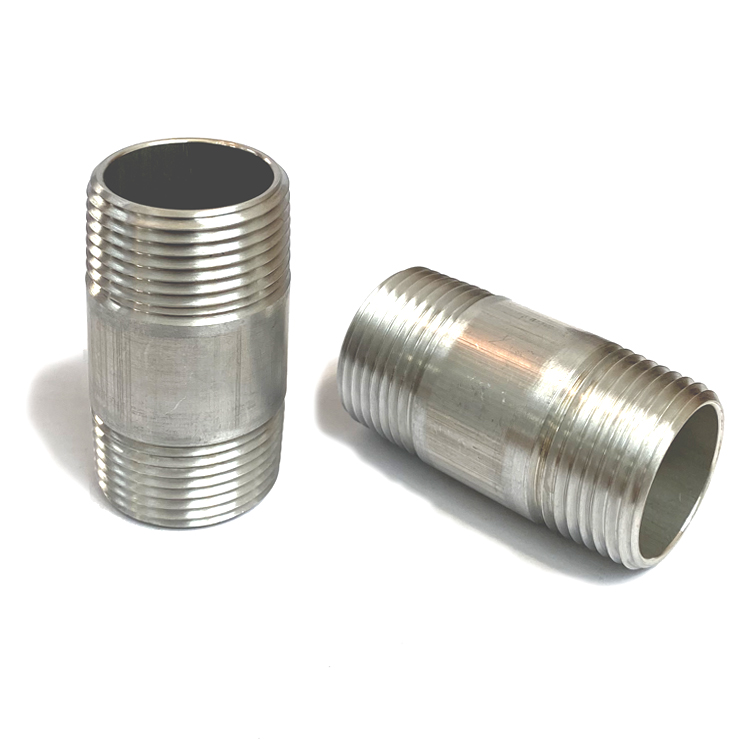
CNC turning is used for rotational components such as shafts, pins, bushings, rods, adapters, and threaded parts requiring controlled diameters, concentricity, grooves, shoulders, and surface finish.
Multi-Axis Machining
Our four-axis and five-axis machining capabilities support components requiring access from multiple angles, reducing repeated setups and improving consistency across interconnected surfaces and complex features.
Drilling and Tapping
Precision drilling and tapping create functional holes, threaded connections, mounting points, and internal features, with process planning based on hole diameter, depth, position, thread type, and material.
Technical Parameters
| Parameter | Available Capability | Applies To | Key Project Requirement |
| Machining Processes | CNC milling, CNC turning, 4-axis and 5-axis machining, precision drilling, and tapping | Flat, cylindrical, multi-angle, drilled, and threaded components | The machining process is selected according to part geometry, feature access, and dimensional requirements. |
| Material Range | Aluminum alloys, stainless steel, carbon steel, brass, copper, titanium, and specialty alloys | Industrial machinery parts, precision components, and custom metal assemblies | The exact material grade must be confirmed according to the drawing and operating environment. |
| Tolerance Capability | Tolerances as tight as ±0.005 mm for suitable components; ±0.01 mm for many standard applications | Critical dimensions, mating surfaces, holes, shafts, and assembly interfaces | Achievable tolerance depends on material, component size, geometry, and feature location. |
| Current Part Range | Adjustable screws, shafts, pin shafts, turning and milling parts, rollers, and optical communication parts | Machinery, flow-control, conveying, and precision equipment applications | Each component is manufactured according to customer drawings and approved specifications. |
| Production Support | Prototype development, sample validation, and production quantities | New product development, replacement parts, and repeat production orders | Sample requirements and production quantities are confirmed during project review. |
| Quality Inspection | Incoming material verification, in-process inspection, final dimensional validation, and CMM inspection | Custom components with critical dimensions or detailed inspection requirements | Inspection methods and checkpoints are agreed according to drawings and functional features. |
| Engineering Support | Material selection, design optimization, and Design for Manufacturing support | New designs, complex parts, and manufacturability improvement projects | Customers should provide 2D drawings, 3D models, and key functional requirements. |
Materials and Finishes
Aluminum Alloys
Aluminum alloys provide a useful combination of lower weight, machinability, and corrosion resistance, making them suitable for covers, housings, brackets, connectors, and precision equipment components.
Stainless and Carbon Steel
Stainless steel is selected for corrosion resistance and durable surfaces, while carbon steel can provide strength and cost efficiency for mechanical parts used in demanding industrial assemblies.
Brass, Copper and Titanium
Brass, copper, titanium, and other specialty materials can be considered when projects require particular conductivity, corrosion resistance, mechanical performance, weight reduction, or compatibility with specific operating media.
Surface Finish Control
Surface condition can be produced according to drawing requirements, including as-machined or polished finishes where applicable. Treatment selection depends on appearance, corrosion exposure, friction, sealing, and assembly needs.
CNC Parts Applications
Our custom CNC machining parts support a range of industrial applications where dimensional accuracy, material performance, reliable assembly, and repeatable production are essential. The machining process and material are selected according to the component’s actual function rather than applying one standard solution to every project.
Industrial Machinery and Automation
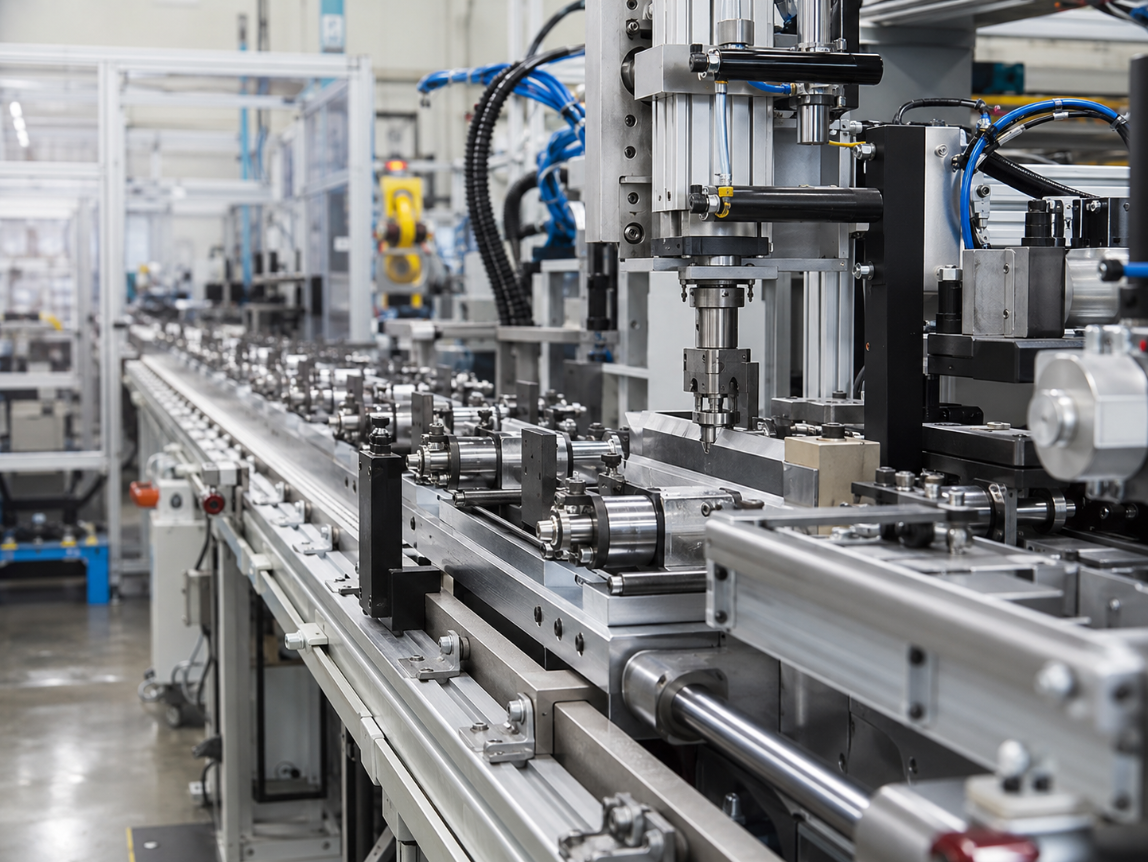
CNC machining parts are used in industrial machinery, production equipment, conveying systems, and automated assemblies where accurate positioning and dependable mechanical movement are required. Shafts, pins, adapter rods, rollers, threaded parts, mounting components, and customized connectors can be produced according to equipment drawings. Material, tolerance, wear conditions, alignment, and mating dimensions are reviewed to support stable installation and repeated operation.
Hydraulic and Flow-Control Systems
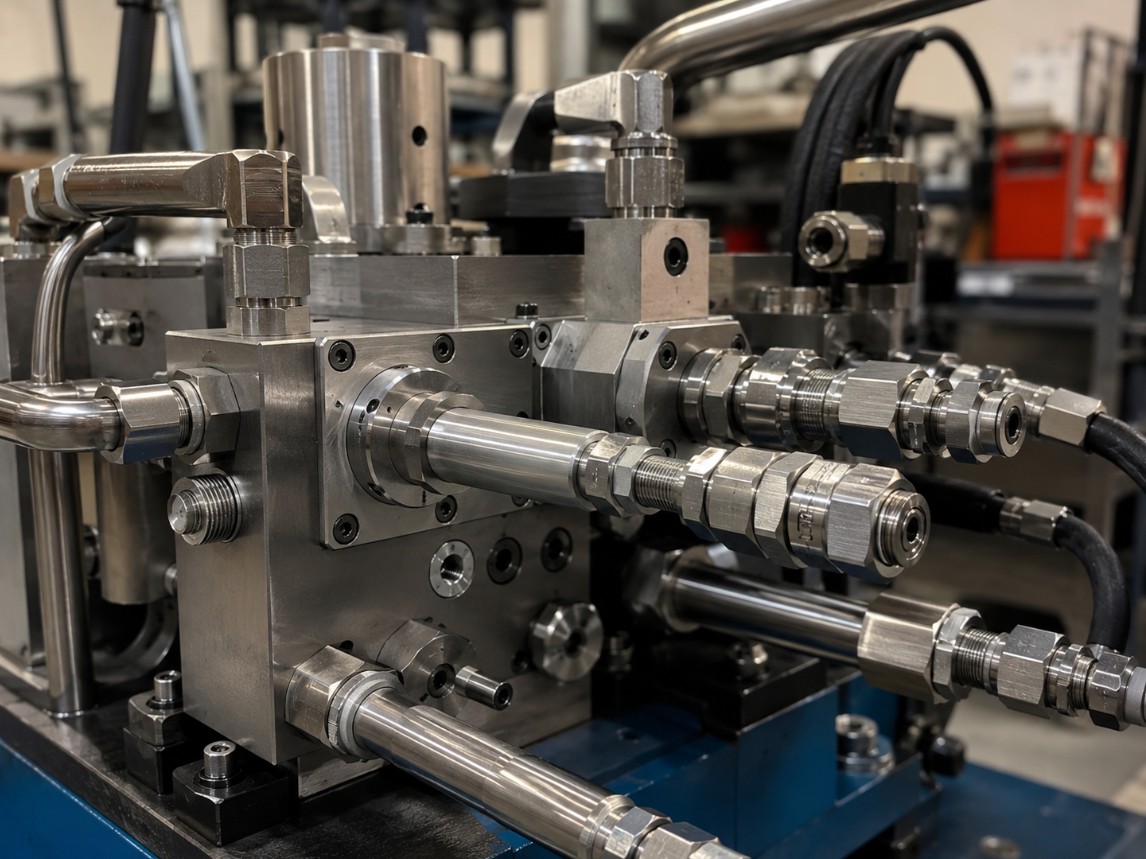
Custom CNC machining supports valve bodies, adjustable screws, rods, fittings, pump-related components, and other precision parts used in hydraulic, pneumatic, and flow-control assemblies. These projects may involve critical threads, sealing surfaces, internal passages, positional accuracy, and corrosion-resistant materials. We evaluate operating media, connection methods, pressure-related requirements, and assembly interfaces before confirming the material and machining route.
Communication and Precision Equipment
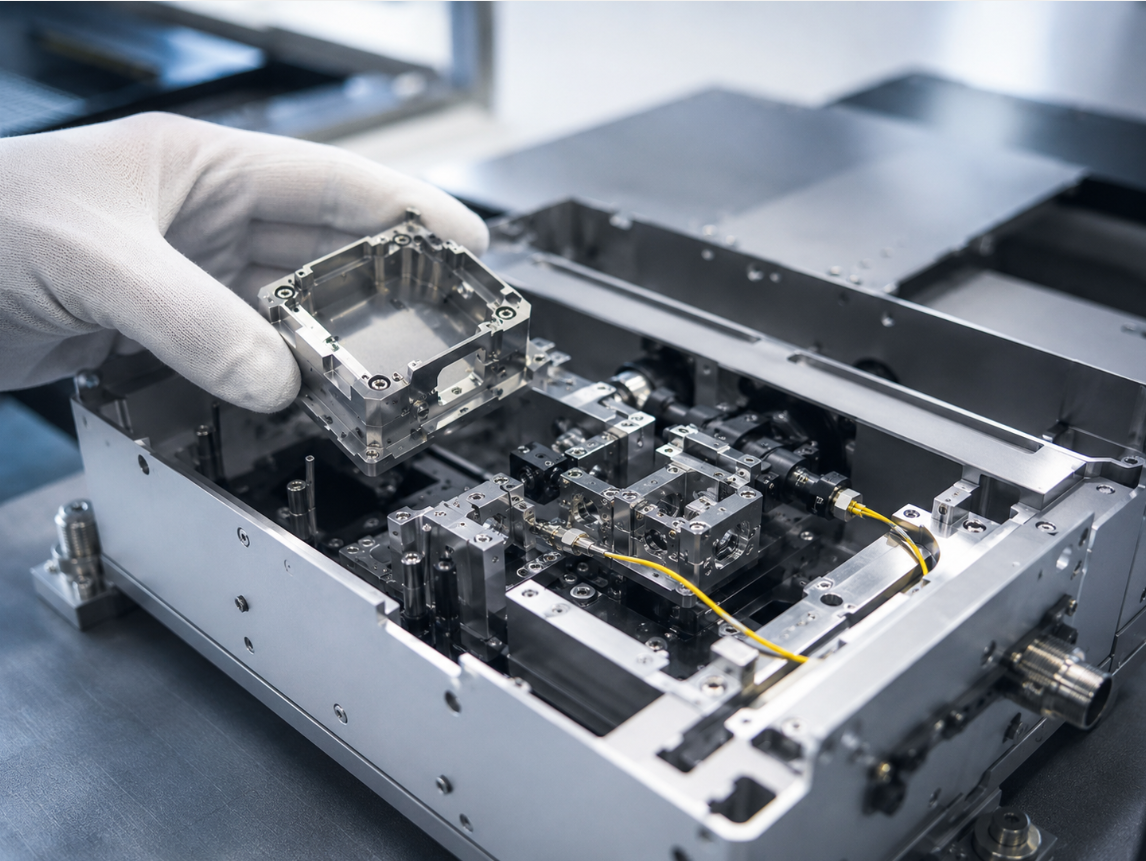
CNC milled and turned parts can support communication equipment, optical communication assemblies, instruments, and other precision devices requiring compact structures and accurately positioned features. Typical requirements may include mounting holes, slots, small profiles, controlled surfaces, and repeatable interface dimensions. We manufacture these components according to customer drawings and confirm packaging methods that help protect detailed surfaces and smaller precision features during transportation.
CNC Part Types
| Part Type | Primary Process | Typical Features | Material Options | Best For | Part Type |
| Shafts and Pin Shafts | CNC turning, drilling, threading | Cylindrical profiles, shoulders, grooves, holes, and threaded ends | Stainless steel, carbon steel, aluminum, and specified alloys | Machinery transmission, positioning, connection, and rotating assemblies | Shafts and Pin Shafts |
| Adjustable Screws and Threaded Parts | CNC turning, threading, drilling | External or internal threads, stepped diameters, slots, and adjustment features | Stainless steel, carbon steel, brass, and other specified metals | Hydraulic systems, valves, mechanical adjustment, and fastening assemblies | Adjustable Screws and Threaded Parts |
| Turning and Milling Parts | CNC turning and CNC milling | Rotational surfaces combined with flats, slots, holes, or multi-face features | Aluminum, stainless steel, carbon steel, brass, and specialty alloys | Industrial equipment and components requiring multiple machining operations | Turning and Milling Parts |
| Rollers and Idler Components | CNC turning, drilling, and secondary finishing | Cylindrical bodies, shaft interfaces, bearing positions, and surface coverings | Stainless steel, steel, and project-specified materials | Paper, textile, conveying, and material-handling equipment | Rollers and Idler Components |
| Precision Milled Parts | CNC milling and multi-axis machining | Pockets, mounting holes, slots, contours, and accurately positioned surfaces | Aluminum, stainless steel, and specialty alloys | Communication equipment, instruments, and compact precision assemblies | Precision Milled Parts |
| Custom Aluminum Components | CNC milling, drilling, and tapping | Covers, housings, mounting structures, connection holes, and lightweight profiles | Aluminum alloys selected according to drawing requirements | Electrical equipment, protective structures, and lightweight industrial assemblies | Custom Aluminum Components |
| Part Type | Primary Process | Typical Features | Material Options | Best For | Part Type |

Get Your Custom Solution & Exact Quote
Need a reliable supply of custom CNC machining parts? Contact JOC Machinery to discuss materials, machining methods, quality requirements, sample validation, and production arrangements for your next project.
Precision Quality Control
Quality control begins before machining starts. We review critical dimensions, material requirements, tolerances, threads, surface specifications, and inspection points to establish a suitable manufacturing and verification plan for each custom CNC machining project.
Step1
Tolerance Planning
Depending on material and geometry, our CNC machining capability can reach tolerances as tight as ±0.005 mm, while ±0.01 mm is applied to many standard requirements.
Step2
Material Verification
Incoming material specifications are checked against project requirements before production, helping prevent mismatches in material grade, mechanical properties, corrosion performance, and subsequent machining behavior.
Step3
In-Process Inspection
Critical dimensions and machining features are inspected during production so deviations can be identified before later operations, surface treatment, assembly, or completion of the full order.
Final Dimensional Validation
Finished CNC machining parts undergo dimensional and visual checks using suitable measuring equipment. Coordinate measuring technology can be used when component geometry or inspection requirements demand detailed verification.
Why Choose JOC
We combine machining capabilities, engineering support, quality management, and international supply experience to provide a coordinated service for custom CNC machining projects. Our team works from customer drawings and project requirements, helping move components from technical review to verified production.
Manufacturing Experience
Founded in 2000, JOC Machinery has developed long-term experience in machinery parts, metal manufacturing, engineering coordination, quality management, and international project communication.
Integrated Production Support
Our manufacturing resources include owned production facilities and three production bases, supporting coordinated metal manufacturing, machining, inspection, supply management, and customized OEM project requirements.
Certified Quality Systems

Related Product


FAQs
Keep in Touch With Us
Send us your drawings, materials, quantities, and tolerance requirements. Our team will review your CNC machining project and prepare a manufacturing solution based on your actual component needs.
Mob:0086-25-83317070
E-mail:peter@jocmachinery.com