 English



Views: 0 Author: Site Editor Publish Time: 16-06-2026 Origin: Site


CNC machining has transformed valve body manufacturing, ensuring high precision and durability. Have you ever wondered how critical industries rely on flawless valve bodies for smooth operations?
In this article, we will explore the importance of CNC machining in valve body production. You’ll learn about the techniques, material considerations, and key factors that influence quality in valve body machining.
CNC machining is a precise, computer-controlled process used to manufacture valve bodies. It involves using a range of tools, such as lathes, mills, and drills, to shape the valve body components from raw materials. CNC machines are programmed with exact measurements and design specifications, ensuring that the parts produced meet strict tolerances and complex geometries.
In valve body machining, the CNC process allows for high accuracy, repeatability, and the ability to handle a wide range of materials. Whether for an oil and gas valve body or a water treatment valve, CNC machining is ideal for producing parts that are both reliable and high-performing.
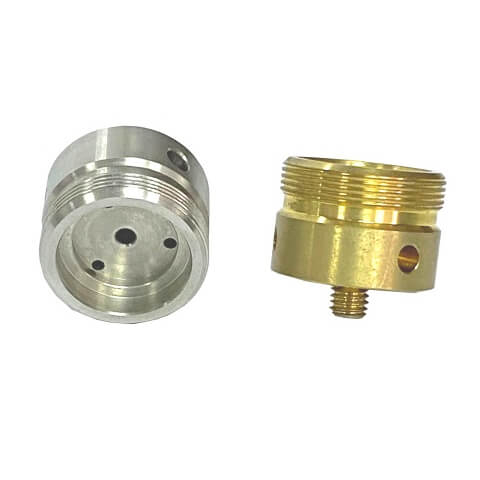
CNC machining is preferred for valve body manufacturing because it offers several advantages:
● Precision and Repeatability: CNC machines can achieve extremely tight tolerances, often as small as ±0.005 mm, which is critical in valve body applications where dimensional accuracy is crucial.
● Versatility: CNC machines can handle a wide range of materials, including stainless steel, carbon steel, alloys like Inconel, and even softer materials like brass.
● Complex Geometries: CNC machining is capable of producing intricate internal and external features such as ports, flanges, and internal cavities, which are essential in valve body design.
By offering precision, repeatability, and versatility, CNC machining ensures that valve bodies are manufactured to exact specifications with high consistency.
The valve body is composed of several critical components that require precise machining. These include:
● Valve Body: The primary housing component, which often includes flanged surfaces, threaded ports, and internal cavities.
● Valve Stem: A long, slender component that transmits motion and needs to be machined for smooth operation.
● Valve Disc: The part that opens or closes to regulate the flow, requiring precise sealing surfaces.
● Valve Seat: The area where the disc seals, requiring excellent surface finishes and dimensional accuracy.
● Bonnet: The enclosure that contains the internal valve parts, often requiring threading and precise machining for assembly.
Each of these parts requires different machining techniques and attention to detail, making CNC machining an essential tool for producing reliable valve bodies.
Technique | Description | Application | Key Considerations |
CNC Turning | Rotating the valve body material while a cutting tool removes material. | Used for outer diameter shaping | Speed: 800-1200 RPM |
CNC Milling | Using rotating tools to remove material along multiple axes. | Used for complex geometries | Feed rate: 0.2-0.4 mm/rev |
CNC Drilling & Boring | Drilling and enlarging holes to create internal passages. | Used for creating ports and cavities | Speed: 50-70 m/min |
CNC Grinding & Polishing | Achieving smooth finishes on sealing areas and surfaces. | Used for sealing and flange surfaces | Surface finish: Ra 0.8-1.6 µm |
CNC turning is commonly used in valve body machining to remove excess material from the outer diameter and achieve the desired shape. The turning process involves rotating the valve body material while a stationary cutting tool removes material, creating cylindrical parts with high precision.
Key considerations for CNC turning valve bodies include:
● Speed: Typically, a spindle speed of 800-1200 RPM is used for turning stainless steel valve bodies.
● Feed Rates: Feed rates of 0.2–0.4 mm/rev are common.
● Cut Depth: A depth of cut between 2–3 mm helps achieve the required dimensional accuracy.
CNC milling is ideal for machining the complex geometries of valve bodies, including flange surfaces, internal passages, and threaded ports. Multi-axis CNC milling machines enable manufacturers to achieve intricate designs in a single setup, which reduces setup time and increases efficiency.
● Process: Involves rotating the valve body material while a cutting tool moves along multiple axes to remove material.
● Applications: Flange faces, internal channels, and valve seats are often machined with CNC milling.
Drilling and boring are used to create the internal cavities and threaded ports required in valve bodies. Precision is crucial to ensure that flow paths align correctly and function properly.
● CNC Drilling: Typically uses carbide drills to make precise holes, often with cutting speeds between 50–70 m/min.
● CNC Boring: Used to enlarge holes and achieve tight tolerances, ensuring that internal channels are accurate.
Material | Properties | Applications | Key Machining Considerations |
Stainless Steel | Corrosion-resistant, durable | Water treatment, oil & gas, chemical industries | Requires slower cutting speeds for hard grades |
Carbon Steel | High strength, lower cost | General industrial valves | Easier to machine but prone to rusting |
Inconel & Alloys | High-temperature resistance, corrosion-resistant | Aerospace, chemical processing, power plants | Requires specialized tools and slower speeds for high hardness |
Brass | Excellent machinability, good corrosion resistance in mild environments | Industrial valve bodies, decorative uses | Easier to machine but has limited high-temperature resistance |
Material selection is one of the most important aspects of CNC machining for valve bodies. The material must meet the performance requirements of the specific valve application, such as resistance to corrosion, pressure ratings, and temperature extremes.
Common materials for valve bodies include:
● Stainless Steel: Offers excellent corrosion resistance, making it ideal for harsh environments.
● Carbon Steel: Used for less corrosive environments but still offers high strength.
● Alloys (Inconel, Hastelloy): Ideal for high-temperature or highly corrosive applications.
Each material has unique benefits depending on the application. For example, stainless steel is commonly used in water treatment and oil & gas industries due to its strength and corrosion resistance. In contrast, materials like Inconel are used in high-temperature applications, such as aerospace or chemical processing.
The hardness and machinability of a material directly impact the machining process. Harder materials, like Inconel, may require slower cutting speeds, while softer materials, like brass, can be machined faster.
● Tool Wear: Harder materials cause more tool wear, so using high-quality carbide or diamond-coated tools is essential.
● Coolant: Adequate coolant application helps prevent heat buildup and extends tool life.
Valve bodies must meet stringent tolerances to ensure proper function. CNC machining allows manufacturers to achieve precise tolerances, typically as tight as ±0.05mm. To achieve these tolerances, it’s crucial to:
● Use high-precision CNC machines capable of maintaining tight dimensional accuracy.
● Inspect parts frequently throughout the machining process using advanced tools like Coordinate Measuring Machines (CMM).
Regular quality checks are essential to ensure the final product meets the required specifications. In-process inspections using CMM machines allow machinists to verify critical dimensions and ensure that the valve body is within tolerance.
● CMM Inspections: Used to check features like flange thickness, port alignment, and thread precision.
Achieving a smooth surface finish is crucial for valve bodies, especially on sealing surfaces. Rough surfaces can lead to leaks and poor performance.
● Surface Grinding: To achieve a surface roughness of Ra 0.8–1.6 µm, CNC grinding or polishing processes are employed.
● Polishing: This process is used to improve the smoothness of sealing areas, ensuring proper contact between the valve seat and disc.
CNC machining is known for its ability to produce valve bodies with tight tolerances consistently. Whether producing a prototype or high-volume runs, CNC machines can replicate the same quality and accuracy in each piece, making it a preferred choice for valve body manufacturing.
With CNC machining, manufacturers can work with a wide range of materials, including both common and exotic alloys, allowing them to create customized valve bodies for specific applications. Whether the application requires high corrosion resistance or strength at extreme temperatures, CNC machining makes it possible.
CNC machining is a highly efficient process, capable of reducing lead times and cutting costs. The automated nature of CNC machines allows for faster production, less downtime, and minimal human error.
CNC machining plays a crucial role in valve body manufacturing, ensuring high precision and efficiency. The article explored key techniques, material considerations, and challenges in CNC machining. JOC Machinery Co., Ltd. excels in delivering valve body solutions, providing products that offer exceptional durability and accuracy. Their expertise in CNC machining guarantees high-quality valve body production, supporting industries with reliable and efficient solutions.
A: Valve body machining is the process of using CNC machines to create precise valve bodies. It involves shaping and finishing materials to ensure the valve body meets dimensional and performance requirements.
A: CNC machining provides high precision, repeatability, and the ability to handle complex geometries. This ensures reliable and durable valve bodies that meet industry standards.
A: Common materials include stainless steel, carbon steel, and alloys like Inconel. These materials are selected based on the valve's intended application and environmental conditions.
A: CNC machining ensures tight tolerances, consistent quality, and the ability to create complex designs, making it ideal for producing valve bodies used in critical applications.
A: CNC machining allows for precise control over dimensions, reducing material waste and improving efficiency. It also enables the production of intricate internal features with minimal setup time.