 English



Views: 0 Author: Site Editor Publish Time: 27-03-2026 Origin: Site


High-speed wire drawing looks simple from the outside. A wire enters the machine, passes through several dies, and comes out smaller, longer, and more consistent. In practice, the process only works well when speed, tension, lubrication, cooling, and take-up stay in balance.
That is why many buyers ask the same question: how does a high speed wire drawing machine work, and what actually makes one line stable at production speed?
This article explains the working principle in plain language. You will learn the core process, the main machine components, the difference between high-speed and conventional layouts, and what to check if you are comparing equipment for industrial wire production.
A high speed wire drawing machine is a production system that reduces wire diameter by pulling metal through a sequence of progressively smaller dies at controlled speed. As the wire becomes thinner, it also becomes longer, and its mechanical properties change through cold working.
The “high speed” part does not only mean a faster motor. It usually means the machine is designed to keep drawing stable while output increases. That requires coordinated drives, accurate tension control, effective lubrication, proper cooling, and reliable take-up.
In many wire and conductor lines, this machine is part of a wider process that may also include rod breakdown, stranding, spooling, and extrusion. For manufacturers planning a broader line layout, it is useful to look at related cable machinery solutions instead of evaluating the drawing section in isolation.
If you want a broader primer before getting into speed and control logic, JOC also has a basic overview of wire drawing machine basics that fits early-stage research.
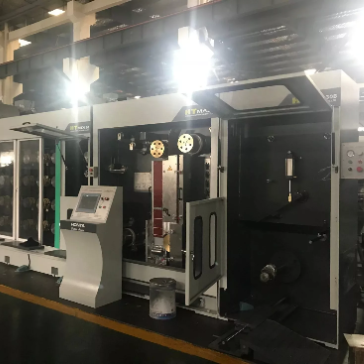
A high-speed system depends on several parts working together, not on one “powerful” component.
| Component | What It Does | Why It Matters at High Speed |
|---|---|---|
| Pay-off system | Feeds rod or wire into the line | Unstable feeding can create snags, vibration, or early breakage |
| Drawing dies | Reduce the wire diameter stage by stage | Die quality and sequence affect force, finish, and reduction stability |
| Capstans or drawing drums | Pull wire through each pass | Their speed relationship controls elongation and line balance |
| Tension control system | Monitors and corrects wire tension between stages | Helps prevent breakage, slipping, and uneven wire quality |
| Lubrication system | Reduces friction between wire and die | Protects dies, improves surface quality, and lowers heat buildup |
| Cooling system | Removes heat from dies, drums, or lubricant | Heat rises fast at higher line speeds and can damage both product and tooling |
| Take-up system | Reels or coils finished wire | Poor take-up can damage otherwise good wire at the final stage |
| PLC and drive controls | Coordinate speed, alarms, recipes, and feedback | High-speed drawing depends on repeatable, synchronized control |
The working principle is easier to understand when you follow the wire from entry to exit.
The wire rod or pre-drawn wire is loaded onto the pay-off system and guided into the first drawing stage.
The wire enters the first die, where its diameter is reduced by controlled pulling force.
After each pass, the wire moves to the next drum or capstan, which pulls it toward the next die.
Each downstream stage runs at a coordinated speed because the wire gets longer as its cross-section gets smaller.
Lubrication reduces friction while cooling controls the heat generated by deformation and surface contact.
Tension sensors or feedback logic monitor what happens between stages and correct speed differences in real time.
Once the wire reaches the target diameter, it is taken up on a spool, coiler, or reel for the next operation.
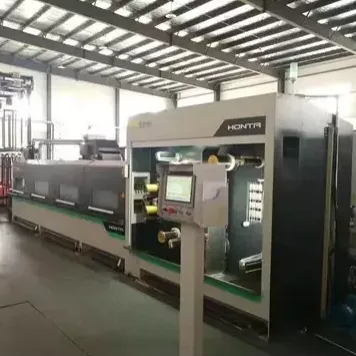
The process starts before the first die. The rod or wire has to enter the line smoothly, with proper alignment and enough stability to avoid shocks. Poor entry guidance can create vibration, scratching, or sudden overload at the first pass.
Most industrial reductions are not done in one step. Instead, the wire passes through several dies, each making part of the total reduction. This spreads deformation across the line and makes the process more controllable.
That staged reduction is one reason high-speed lines can produce consistent output without pushing too much strain into a single pass.
As the wire diameter decreases, the wire length increases. That means each stage has to run at the correct relative speed. If one stage pulls too hard or too slowly, the line can lose tension balance.
In a modern system, this is handled by coordinated drives and closed-loop control rather than by rough manual adjustment alone.
This is one of the biggest differences between a basic line and a truly high-speed one. Stable tension helps the machine produce uniform diameter, cleaner surface quality, and fewer breaks. It also helps protect dies, drums, and take-up equipment from unnecessary stress.
Tip: When comparing machines, ask how tension is measured and corrected between passes, not just what the maximum line speed is.
Friction and heat are constant challenges in wire drawing. The faster the line runs, the more important lubrication and cooling become. A good system lowers die wear, improves surface finish, and helps maintain process consistency over long production runs.
That is especially important in applications where finish, diameter control, or electrical performance matter. If your focus is conductor production, it also helps to compare machine details with material-specific pages such as copper wire drawing machines for industry.
After the final pass, the wire must be wound in a controlled way. Even if the drawing stages perform well, poor take-up can still cause scratches, overlap issues, or handling damage. In production planning, this final section should be treated as part of the quality system, not as a minor accessory.
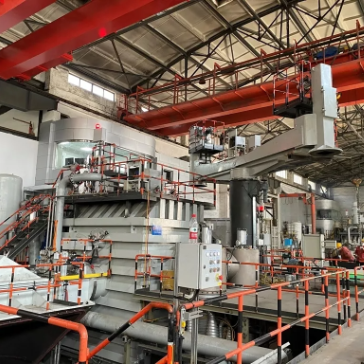
A high-speed line is not only about throughput. It is also about staying stable while throughput rises. That is where machine layout and control quality start to matter more than headline speed alone.
| Factor | High-Speed Straight-Line Approach | Basic or Less Optimized Approach |
|---|---|---|
| Wire path | More direct and easier to synchronize | Can be harder to keep stable at rising speed |
| Tension management | Usually sensor-based or closed-loop | Often depends more on manual setup |
| Cooling and lubrication | Designed for continuous heat control | More likely to become a limit point |
| Quality consistency | Better suited to repeatable industrial output | Quality may vary more across long runs |
| Automation | Better recipe control, alarms, and monitoring | Lower visibility into line behavior |
Manufacturers exploring layouts for different products should also review the different types of wire drawing machines available, because high speed is only one part of the selection decision.
A high-speed system is usually a strong fit when you need more than raw output. It makes the most sense when your line also depends on consistency, repeatability, and lower disruption over long runs.
High-volume production with repeatable product sizes
Applications where wire surface quality affects downstream results
Operations that need tighter process control and fewer manual corrections
Plants that want better integration with take-up, spooling, or later cable processes
Factories evaluating multi-line productivity gains through multi-wire drawing machine efficiency
It may be less appropriate when production volume is low, product changes are constant, or the full line around the machine is not ready to support higher speed.
Buyers often compare machines by speed first. That is understandable, but it can hide the real reasons one line performs better than another.
Common Mistake: Focusing on maximum speed without asking how the machine maintains tension at that speed.
Common Mistake: Treating die life as a consumables issue only, instead of checking lubrication quality, cooling design, and alignment.
Common Mistake: Looking at the drawing machine alone while ignoring pay-off, take-up, spool handling, or downstream integration.
Warning: A machine that can run fast in ideal conditions may still struggle in daily production if material variation, maintenance discipline, or operator setup are not considered.
A practical evaluation should include both machine design and production fit.
Wire material and starting diameter
Target finished diameter and tolerance expectations
Number of passes and die sequence logic
Drive method and speed coordination
Tension sensing and control method
Lubrication and cooling layout
Take-up style, spool size, and downstream compatibility
Maintenance access, spare parts support, and control diagnostics
The best machine is not always the one with the highest claimed speed. It is the one that matches your material, product range, quality target, and line configuration with the least process risk.
So, how does a high speed wire drawing machine work? It works by pulling wire through multiple dies under carefully controlled speed, tension, lubrication, cooling, and take-up conditions. The real advantage of a high-speed system is not speed alone. It is the ability to keep production stable, wire quality consistent, and output efficient as the line runs harder.
A: Not always. Many high-speed systems use a straight-line layout because it supports stable tension and coordinated drawing, but “high speed” describes performance while “straight line” describes the machine arrangement.
A: It depends on the machine design, but common materials include steel, stainless steel, copper, aluminum, and some alloys.
A: Common causes include poor alignment, incorrect die sequence, unstable tension, weak lubrication, overheating, or material defects.
A: They reduce friction, control heat, improve surface finish, and help extend die life. Their importance increases as line speed rises.
A: Compare tension control, die setup, cooling design, take-up quality, control system logic, material range, and service support.